Photo by Franco Debartolo on Unsplash
Growth rarely comes from adding more activity to a broken customer journey. The answer to what a growth marketing agency does is straightforward: it connects marketing, sales and technology through a shared strategy, then tests ways to improve acquisition, conversion, retention and revenue. The focus is measurable business outcomes, not simply producing campaigns or increasing clicks.
It’s reasonable to expect an agency to do more than run ads or publish content. Growth marketing considers the whole customer journey, using data and experimentation to find friction and improve performance over time. The right measures depend on the business goal, whether that’s attracting qualified prospects or encouraging repeat purchases.
This guide explains how growth agencies support each stage of the customer journey, the services they commonly provide and how different fee models work. It also covers how agencies assess results, so you can understand what to expect from a strategy and where its impact should appear.
Key Takeaways
- A growth agency aligns marketing, sales and technology around business outcomes, rather than treating each channel as a separate activity.
- Customer journey optimisation looks for ways to improve acquisition, conversion, retention and revenue through focused testing.
- Agency fees depend on the engagement model, scope, objectives and level of ongoing support.
- SEO, paid advertising and content play different roles: the right mix depends on how quickly you need to reach customers and build demand.
- Useful measurement connects campaign activity to outcomes such as customer acquisition cost, revenue and retention, so teams can decide what to improve next.
Digital agency services and integrated strategy
A growth marketing agency connects sales, marketing and technology through centralised strategic leadership. It uses data, testing and experimentation to identify opportunities, then directs campaigns towards measurable business outcomes.
An integrated strategy links digital marketing channels to shared commercial goals. For example, paid search might attract potential customers, while website design supports conversion and CRM activity encourages repeat purchases. This gives teams a clearer view of how each channel contributes, rather than treating every campaign as an isolated task.
Delivery can bring together performance marketers, CRM specialists, data scientists, product engineers and conversion optimisation experts. Their roles differ, but the work connects: analysts identify a drop-off, developers improve the relevant page, and marketers test new messages. Strategic agencies such as Stratagon apply this integrated approach to align sales and marketing efforts, coordinating activity across the customer journey to drive measurable growth.
Digital analytics and campaign measurement
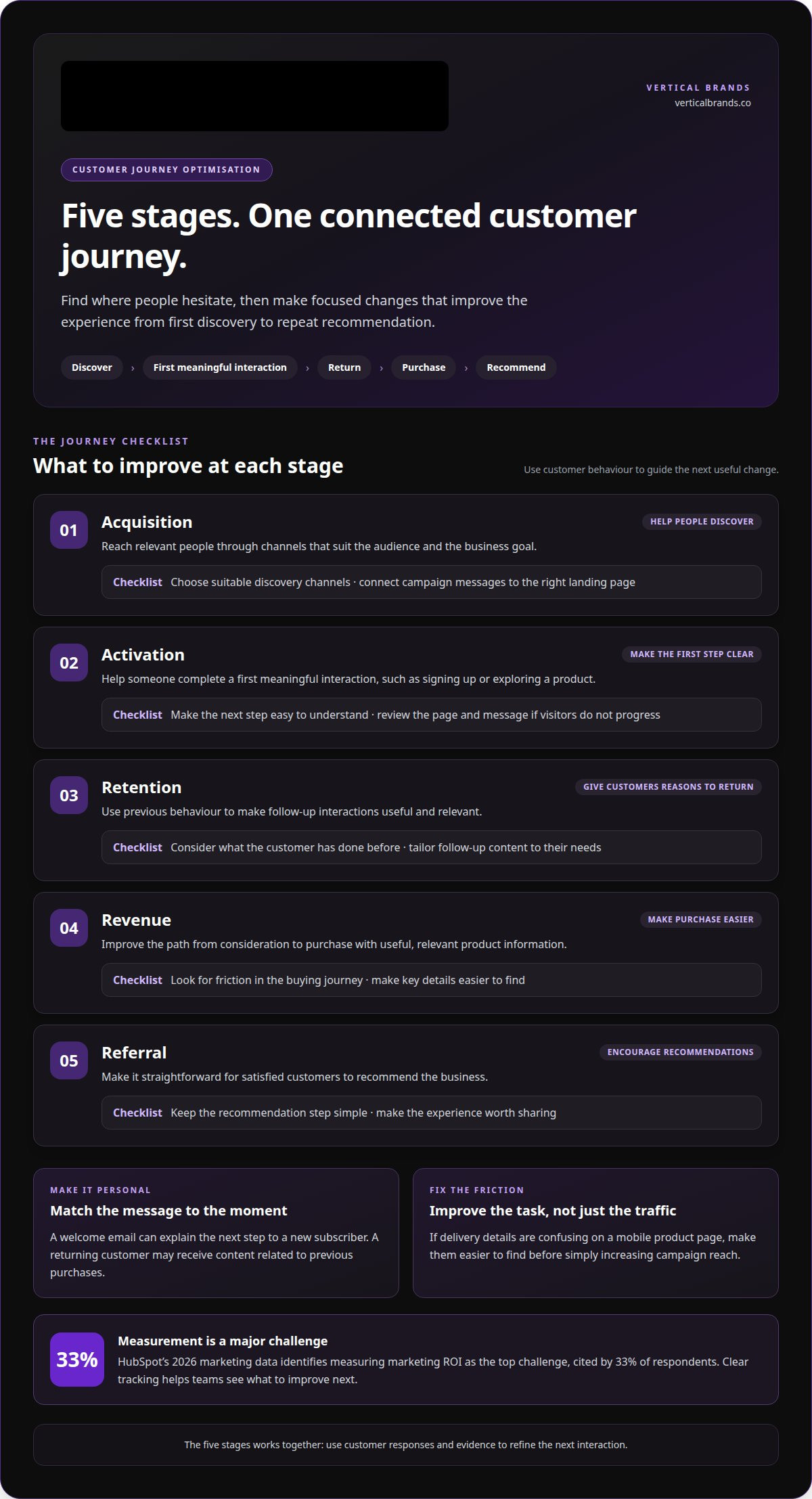
Digital analytics collects and interprets campaign and customer data to show how marketing activity relates to business results. It matters because clicks alone cannot explain whether a campaign attracted valuable prospects or supported sales. HubSpot’s 2026 marketing data identifies measuring marketing ROI as the top challenge, cited by 33% of respondents. Clear tracking helps teams compare channels, identify weak points and make better decisions about where to focus.
Data-driven campaigns and experimentation
Data-driven campaigns use observed behaviour and structured tests to improve marketing performance. Growth agencies can compare two versions of a landing page, advert or email, then use the results to decide what to change. They gather data, run A/B tests and iterate, rather than relying on one big creative idea. This process helps teams find practical improvements and build learning into ongoing campaigns.
Digital transformation services have a different focus. They centre on technology-led modernisation, including technology integration, analytics and consulting. A business replacing disconnected systems may need that work first; an integrated growth strategy can then connect the tools to customer experience and commercial priorities. The distinction matters: installing technology does not, by itself, create a coordinated marketing plan.
Campaign outputs can include digital adverts, email campaigns, social media posts and videos. The strategy determines which deliverables suit the audience and objective. For instance, a campaign might pair a social post with a focused landing page and follow-up email. Each channel has a defined role, while measurement shows where the customer journey needs attention.
To assess an agency’s approach, look for a clear link between objectives, channels, data and decisions. Ask how reporting informs the next test and how teams respond when performance changes. A useful strategy makes those connections visible, so campaign activity can be refined as evidence builds.
Growth marketing and customer journey optimisation
Growth marketing improves the customer journey through focused changes at each stage, from first discovery to repeat purchase. The challenge is to find where people hesitate, then address the cause. A strong strategy doesn’t treat acquisition as the finish line: it considers how activation, retention, revenue and referrals connect.
Customer personas give teams a practical picture of different audience needs. One persona might represent a first-time buyer comparing options, while another represents an existing customer considering a repeat purchase. Those distinctions shape channel choices, messages and landing pages. They also help teams avoid sending the same campaign to people with different levels of familiarity or intent.
The journey can be viewed through five connected stages:
- Acquisition: Help relevant people discover the business through suitable channels.
- Activation: Make the first meaningful interaction clear, such as completing a sign-up or exploring a product.
- Retention: Give customers useful reasons to return, based on their previous behaviour.
- Revenue: Improve the path from consideration to purchase, including relevant product information.
- Referral: Make it straightforward for satisfied customers to recommend the business.
Personalisation connects those stages to individual behaviour. For example, a welcome email can explain the next step to a new subscriber, while a returning customer may receive content related to previous purchases. The aim is relevance, not simply adding a name to a message. Teams can use customer responses to refine timing, content and the next interaction.
User experience (UX) describes how a person experiences a digital journey; user interface (UI) covers the controls and visual elements they interact with. A growth team might review a mobile product page, spot confusing delivery details, then make them easier to find. That change addresses a specific point of friction. Website design and customer experience design should support the same customer task, rather than compete for attention.
Media management also needs to reflect the customer journey. A discovery campaign may introduce a business, while a later message can answer a common objection or clarify product value. If visitors reach a page but don’t progress, examine the page and its message before simply increasing campaign reach. This keeps activity connected to the actual customer challenge.
For organisations mapping these stages into a practical growth plan, customer journey strategy can help connect audience needs with channel decisions.
Agency business models and fees
Agency fees reflect how work is scoped, delivered and managed. Common models include a monthly retainer, a project fee or a percentage of advertising spend. A retainer can cover ongoing planning and campaign management; a project fee suits defined work, such as building a marketing strategy. The right structure depends on the activity and level of support required.
A retainer provides continuity for work that needs regular review, such as search optimisation or paid campaign management. A project fee covers a defined deliverable, such as an audit or customer journey plan. A percentage of advertising spend links the agency’s fee to the media budget it manages, so the agreement should distinguish management work from advertising spend itself.
The price depends on the scope, objectives, channels, expertise and reporting required. A business commissioning one campaign has different needs from a company coordinating acquisition and retention across several channels. A clear scope helps both sides understand what the fee covers and how changes are handled.
Set the business vision before agreeing on deliverables. Define the position the company wants to occupy, the customers it needs to reach and the commercial outcome that matters. For example, a business seeking more repeat purchases needs a different plan from one prioritising new customer acquisition. Creative work should support that direction, not become an isolated output.
Hiring an agency can provide specialist capabilities without building every role in-house. The decision depends on workload, existing skills and how much coordination the business can manage. An internal team may retain strategic ownership, while an agency delivers defined specialist work. Alternatively, organisations seeking senior strategic guidance without a full-time executive hire can turn to Budget Boosters for fractional CMO leadership. Agreeing responsibilities early reduces duplicated tasks and unclear approvals.
Measure business growth against the original objective. Useful metrics include customer acquisition cost, customer lifetime value, monthly recurring revenue and retention rate. For example, more leads may look positive, but rising acquisition costs could weaken the commercial result. A shared measurement plan connects campaign reporting to the outcomes leaders use to assess progress.
Reporting should show what changed, what the data indicates and what action follows. A monthly review can examine campaign performance, while a broader strategic discussion can reassess priorities. If the goal is retention, the review should examine repeat behaviour rather than focus only on impressions. Different fee structures have different implications, so match the payment model to deliverables, decision-making and the results being tracked.
SEO, paid advertising, and content marketing
SEO, paid advertising and content marketing solve different acquisition problems. SEO helps people find relevant pages through search; paid advertising buys visibility for selected audiences or queries. Content gives both routes useful material, such as a guide that answers a buyer’s question. A growth strategy connects each activity to the audience, objective and next step.
Search engine optimisation develops a site’s visibility through relevant pages, useful information and technical improvements. It suits businesses building demand that can grow through organic discovery. SEO typically shows meaningful results within 3-6 months, so it needs sustained work rather than a brief campaign. A retailer, for example, might improve product category pages around the questions customers use before choosing.
Paid search places adverts against relevant search queries, while paid social uses advertising across social media platforms. Search can reach people already expressing intent; social campaigns can introduce a product to an audience that hasn’t started searching. A campaign can test different creative and audience groups, then compare qualified visits or enquiries. These channels have distinct roles, so judge results against the goal.
Paid campaigns can generate leads within weeks of a well-built campaign going live. That speed makes them useful for testing demand, supporting a launch or reaching people during a defined sales period. It doesn’t make every click valuable. Teams need to connect the advert to its landing page, then assess whether visitors take the intended action. A mismatch between advert claims and page content can waste attention.
SEO and paid advertising can inform each other. Search-query data may reveal the language customers use, helping teams shape organic content. Meanwhile, paid search can test demand for a topic before a business invests in a larger content programme. HubSpot’s 2026 State of Marketing report identifies website, blog and SEO as the highest ROI-generating channel available to marketers. That makes a proven content plan worth assessing alongside campaign results.
Content marketing can include articles, guides and other material that answers specific customer questions. A practical sequence starts with a search or sales question, creates a focused page, then links it to a relevant next action. For example, an explainer can clarify product differences before directing readers to comparison details. Useful content supports discovery and consideration, while paid promotion can extend its reach.
Choose the mix by identifying the immediate business challenge. If demand needs a quick test, paid search or social advertising can provide early audience feedback. If customers repeatedly research before buying, SEO and educational content can build visibility around those needs. A growth marketer reviews performance and adjusts targeting, landing pages or content priorities. The right combination depends on intent, competition and the time available to build demand.
Analytics and marketing attribution
Marketing analytics turns campaign and customer data into evidence for business decisions. Attribution helps explain which interactions contributed to an outcome, such as a sale or subscription. Without both, a team may see that revenue changed but struggle to identify which activity influenced it. The aim is a measurement system that connects marketing actions with commercial performance.
Start by defining the outcome, then select metrics that reflect it. For an online retailer, that might mean tracking customer acquisition cost alongside repeat purchase behaviour. A subscription business could monitor monthly recurring revenue and retention rates. These measures reveal different parts of performance: acquisition cost shows what attracting customers involves, while retention indicates whether they continue to generate value.
Attribution addresses a practical problem: customers often interact with several channels before buying. Someone might discover a brand through a social advert, return through organic search and purchase after an email. A first-touch model gives credit to the first interaction; a last-touch model credits the final one. Multi-touch approaches distribute credit across several interactions. Each offers a different view, so the model should match the decision being made.
Useful analysis also depends on consistent tracking. Teams need clear event definitions for actions such as product views, sign-ups and completed purchases. If two platforms define a conversion differently, their reports can disagree. A shared measurement plan sets out what counts as a lead or sale, which data source records it and who reviews the result.
The measures used to judge marketing have also shifted. HubSpot’s 2026 marketing data identifies measuring marketing ROI as the top challenge, cited by 33% of respondents. That pressure makes it important to connect campaign activity to outcomes, rather than treating engagement as a business result.
A useful reporting cycle links three things: the result, its likely drivers and the next decision. If customer acquisition cost rises, compare campaign spend with the number and quality of acquired customers. If retention weakens, examine repeat behaviour and the customer experience after purchase. The analysis should lead to a defined action, such as reallocating budget or changing a follow-up sequence.
Attribution is not a perfect account of every influence. It is a decision tool, and its limits depend on tracking quality, data coverage and the model selected. Review those assumptions when channels or buying behaviour change. For businesses improving customer data and follow-up, strengthen your email and CRM measurement with a more connected view of customer interactions.
Vertical Brands: Klaviyo Email Marketing
Vertical Brands can support businesses that need stronger customer retention and more coordinated marketing. Its Klaviyo Email Marketing and Email Marketing & CRM Management services support relevant customer communications, while Paid Social and Paid Search help businesses reach audiences through advertising.
Turn to this support when you need to connect customer data with email activity or align paid campaigns with wider commercial goals. The right mix depends on your audience, objectives and marketing priorities. A clear plan gives each channel a defined role instead of letting activity run in isolation.
Contact Vertical Brands to discuss your growth marketing requirements.
Set the next growth priority
Your next growth decision should start with a constraint, not another campaign. Identify what is limiting progress now: inconsistent follow-up, an underused customer list or paid activity disconnected from retention. Then define what you want the next period of work to deliver. That gives your team a practical basis for prioritising investment and assessing whether the operating model needs to change.
Understanding what a growth marketing agency does can help you decide whether you need strategic direction, specialist execution or both. Vertical Brands supports customer engagement through Klaviyo Email Marketing and Email Marketing & CRM Management, alongside Paid Social. Start with the commercial problem you need to solve and the role each channel should play.
Before committing, align stakeholders on the outcome, who owns the decision and what evidence would trigger a change in direction. That keeps agency work connected to internal execution and prevents a sound plan from stalling between teams.
Contact Vertical Brands to discuss the next step for your growth strategy. A clear priority gives your marketing activity stronger direction.
Frequently Asked Questions
What is a growth agency?
A growth agency helps businesses address barriers to commercial progress through coordinated strategy and execution. A useful starting question is: what does a growth marketing agency do for this business? For example, a company preparing to enter a new market might need to align its offer, customer communications and acquisition activity. The agency’s role is to focus that work on a defined commercial objective.
Agency partnership vs in-house team: which is right?
An agency partnership can suit a business that needs specialist capabilities or additional delivery capacity without hiring every role internally. An in-house team may be better placed to manage work requiring constant product knowledge or close daily collaboration. The choice depends on available skills, workload and decision-making needs. A practical arrangement might keep strategy ownership internal while assigning a defined area of execution to an agency.
How is growth measured?
Measure growth by comparing a defined business outcome with a relevant baseline. For example, assess whether a new customer welcome journey changes repeat purchase behaviour, rather than judging it solely by email opens. Pair an early indicator, such as completed sign-ups, with a commercial outcome, such as revenue from those customers. This helps distinguish early signs of progress from results that matter to the business.
What Does ‘Growth’ Mean?
Growth means progress towards a business objective, not simply a rise in website visits or social engagement. For one company, it may mean attracting customers likely to stay; for another, it may mean increasing repeat orders or expanding into a new market. Define the intended change first. That gives teams a shared basis for prioritising work and deciding whether their activity is creating useful progress.
What are the warning signs of a bad agency?
Warning signs include unclear deliverables, reporting that never leads to decisions and activity with no link to agreed business objectives. Be alert if ownership of approvals or measurement is vague, too. For example, a report showing more clicks but no explanation of lead quality leaves leaders without a clear next action. A sound working relationship makes responsibilities, review points and decision processes explicit.
What is growth marketing?
Growth marketing uses structured learning to improve how a business attracts and serves customers. It treats each campaign as an opportunity to understand behaviour, not just as promotion. For example, if potential buyers abandon a product comparison, a team can investigate what information they need, then refine the page or message. That learning should inform the next marketing decision and the experience customers receive.
What services does a growth marketing agency provide?
Services can include search engine optimisation, paid search, paid social, email marketing and CRM management, website development, influencer marketing, UGC content and growth advisory. The right combination depends on the business problem. A company with a weak search presence may prioritise SEO, while one with disconnected customer communications may focus on email and CRM. Scope should reflect the objective, not simply the number of channels.
How does growth marketing differ from traditional digital marketing?
Digital marketing describes online channels and activity; growth marketing describes how that activity is directed towards business progress. The same paid search campaign could focus on reach or be assessed by customer quality and what happens after acquisition. Ask directly: what does a growth marketing agency do with performance data? A sound approach uses evidence to guide practical decisions, rather than reporting activity without a next step.