Photo by Georg Eiermann on Unsplash
A backlink is not a win simply because another site publishes it. For UK retailers, e-commerce link building services should focus on earning relevant links that make sense in context, not collecting placements for their own sake. What matters are the publisher’s audience, the quality of the page and whether the link supports your wider search strategy.
That’s why link building involves more than sending outreach emails. Publisher relationships, blogger collaborations and digital PR can all create opportunities, but every placement still needs to meet clear quality standards. Approving sites is part of the process, not an afterthought.
This article explains how these elements fit together for e-commerce businesses in the UK. You’ll learn what a professional service can include, how outreach and digital PR contribute to backlink acquisition, and what to assess when reviewing a link-building approach. The focus is practical: how links are sourced, evaluated and approved, and how the work supports your store’s search visibility.
Key Takeaways
- Build a campaign around relevant pages and publishers, with clear criteria for assessing each placement.
- Prioritise contextual backlinks from trusted sites with consistent traffic over placements chosen for volume alone.
- Use blogger relationships to develop relevant collaborations and stronger publisher connections over time.
- Set approval criteria for sites and content before publication so placements align with your brand and campaign goals.
- Connect digital PR with link building to create useful stories and earn coverage that supports your wider search strategy.
What is Link Building?
Link building means earning links from other websites to pages in your online shop. Search engines can use links to discover pages and understand how they relate to other content. A focused campaign sets priorities before outreach begins: target pages, relevant publishers, useful content and approval criteria. For example, a homeware shop might prioritise a buying guide over a general link to its homepage.
Campaign planning starts with your commercial goals. The team maps products and categories to search opportunities, then identifies publishers whose readers have a reason to visit those pages. It sets acceptable topics, placement standards and reporting measures. When approving a site, consider relevance, editorial quality and readership, not just whether the publisher is willing to publish. These decisions help e-commerce link building services in the UK stay aligned with your store’s priorities.
Google’s spam policies treat links created primarily to manipulate rankings as link spam. Paid placements should use an appropriate link attribute, such as rel="sponsored" or rel="nofollow", rather than appearing as editorial endorsements.
In the UK, this work is offered by specialist SEO agencies, digital PR teams and outreach-led link-building agencies. Their methods differ, so assess campaign strategy, publisher selection, approval processes and reporting. When comparing e-commerce link building services in the UK, consider the agency’s understanding of product and category pages alongside its outreach process. Agency size alone does not show whether its approach suits your store.
Placement pricing and campaign budgets depend on publisher requirements, content production, outreach volume and target markets. A campaign focused on editorial placements differs from one seeking international coverage. The price depends on the case and is given after a quote request; scope, publisher requirements and content needs shape the budget. Set priorities first, rather than judging a proposal by its promised number of links.
International campaigns need market-specific publisher research and content suited to each audience. A UK retailer entering another country might map local-language category pages to relevant regional publications. Plan how links will support destination pages and how results will be reported by market. One outreach list rarely serves every country equally well.
Case studies show why measurement needs more than link counts. One professional-services campaign increased referring domains from 74 to 168 within six months, while organic enquiries increased by 41% within six months. A separate ecommerce outreach and digital PR case study reported a 38% increase in organic ecommerce revenue over 7 months. These are individual campaign results, not a forecast for every store.
To assess ROI, compare campaign costs with changes in organic revenue and qualified enquiries, then review rankings and referral trends. Track target pages and baseline performance before launch. This helps separate link-building activity from other changes, such as promotions or site updates. Link building works best as a planned part of wider e-commerce growth, not as a standalone count of placements.
Publisher outreach and backlink acquisition
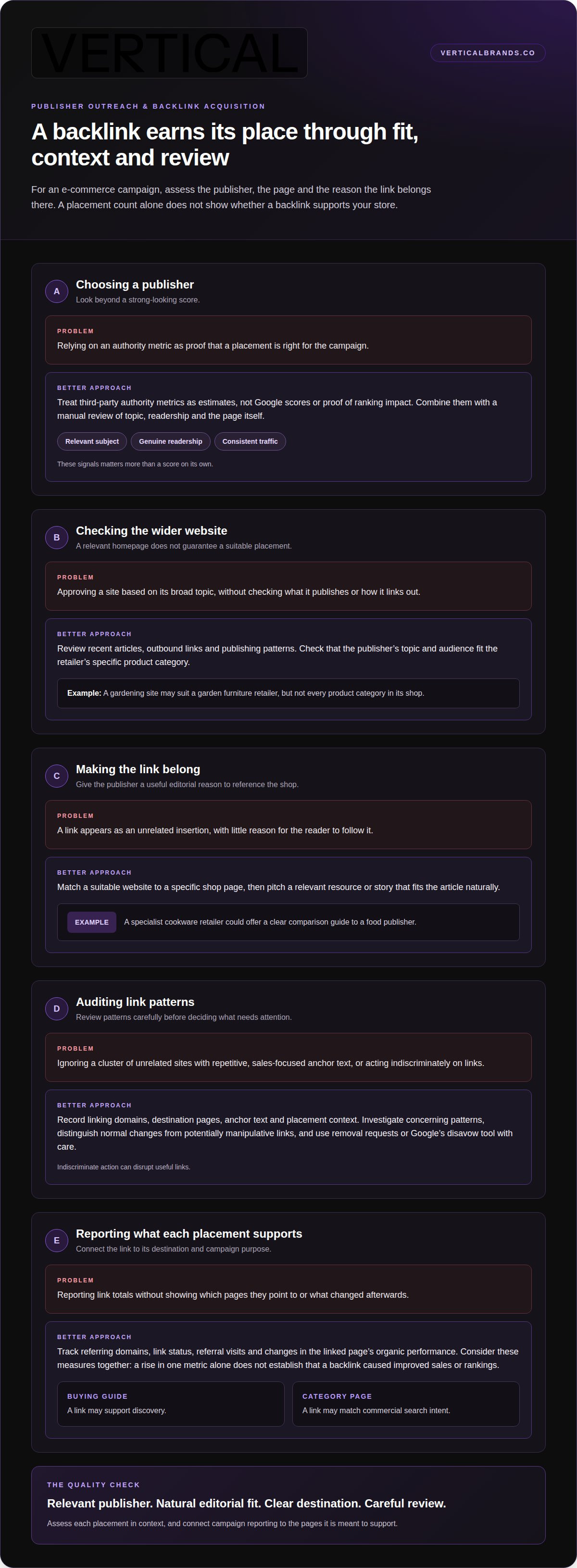
Effective outreach gives a publisher a reason to reference your shop. A professional team matches suitable websites to specific pages, then develops a relevant pitch or useful resource. For example, a retailer selling specialist cookware could offer a clear comparison guide to a food publisher. The link should fit the article naturally, rather than appearing as an unrelated insertion. That editorial fit gives readers a reason to follow it.
Before making contact, the team reviews the proposed page and the wider website. A relevant subject, genuine readership and consistent traffic matter more than a strong-looking score alone. A site about gardening may suit a garden furniture retailer, but not every product category in its shop. The publisher’s topic and audience matter. Reviewing recent articles, outbound links and publishing patterns helps distinguish genuine editorial opportunities from placement inventories.
Authority metrics can help organise prospect research, but they are estimates from third-party tools, not Google scores or proof that a backlink will improve rankings. A high metric cannot make up for irrelevant content, weak readership or a page crowded with commercial links. The outreach team should combine available metrics with manual review. For instance, a modestly sized specialist publication may be more topically relevant than a broad site with little connection to the retailer’s products.
Backlink audits add another layer of control. The team records linking domains, destination pages, anchor text and placement context, then looks for patterns that warrant investigation. A cluster of unrelated sites using repetitive, sales-focused anchors deserves closer review than one isolated link. The audit should distinguish normal changes from links that appear manipulative. Removal requests or Google’s disavow tool require careful judgement; indiscriminate action can disrupt useful links.
For an online shop, acquisition reporting should connect each placement to its destination page and campaign purpose. A link to a buying guide may support discovery, while a category-page link may match commercial search intent. Track referring domains, link status, referral visits and changes in the linked page’s organic performance. Consider these measures together. A rise in one metric alone does not establish that a backlink caused improved sales or rankings.
- Prospect review: Check subject relevance, editorial quality and audience fit.
- Placement review: Confirm the link appears in meaningful, relevant content.
- Audit review: Record live links and investigate suspicious patterns before taking action.
Original assets can give publishers a stronger reason to reference a retailer. For example, UGC content can provide authentic product perspectives for a campaign resource, when it genuinely serves the publication’s readers. That gives outreach a concrete editorial angle, rather than relying on a generic request for a backlink.
Blogger outreach and publisher relationships
Blogger outreach works best when an agency builds relevant relationships, not just contact lists. Strong campaigns match the retailer with the publisher’s audience and establish a clear editorial reason to collaborate.
How a provider builds a relevant outreach network
A provider maps bloggers and publishers by subject, audience and content format. For a homeware shop, this could include interior design writers, recipe publishers or independent product reviewers. The team assesses recent posts and whether the site’s readers are likely to value the retailer’s products. An effective network is organised by topic and audience, allowing tailored outreach instead of generic messages.
How a provider manages publisher relationships
Relationships develop through relevant pitches, clear communication and respect for editorial decisions. An agency can record each publisher’s preferred topics, formats and previous conversations, then tailor future proposals. A blogger covering sustainable gardening, for example, may respond to a practical resource about choosing durable outdoor products. Follow-up should add context, not pressure. Shape each pitch and follow-up around the publisher’s needs, rather than relying on a fixed script.
Blogger outreach and digital PR
Digital PR gives blogger outreach a story or asset worth discussing. A retailer might share original product expertise, customer insights or useful material for a seasonal feature. Bloggers can then decide whether it suits their readers and editorial plans. The agency should coordinate the angle, supporting information and timing, while keeping the retailer’s claims accurate and the proposed coverage relevant.
Gambling and iGaming outreach needs a particularly focused publisher network. A general lifestyle blogger is unlikely to suit a specialist betting or gaming business. The agency should identify publications that already cover the subject and assess their audience, editorial approach and suitability for the campaign. Proposed content should also be clear about the brand and avoid framing gambling as a route to financial success.
In any sector, organic coverage depends on editorial fit. A blogger may decline a pitch, suggest a different angle or prefer to create content independently. The outreach team can adapt its proposal without demanding a particular conclusion or link placement. That distinction protects publisher relationships and makes collaborations more credible to readers.
Assess the network’s subject coverage, the quality of past collaborations and how the agency manages conversations. Ask how it records publisher preferences and keeps outreach relevant as campaigns evolve. A driven, well-organised process can build relationships over time instead of treating each blogger as a one-off route to a backlink.
Can I approve sites and content before they go live?
Yes. A link-building campaign can include client approval before a publisher publishes a placement. Agree on the review stages at the start: site shortlist, proposed topic, draft content and final placement details. This gives your team a defined opportunity to assess relevance, brand fit and accuracy. For example, a retailer can reject a proposed home décor blog before work begins if its audience does not match the shop.
Site approval should consider more than the domain name. Review the specific page, its subject, writing quality and surrounding links. A publisher may cover your product category broadly, yet a particular article might be outdated or poorly matched. The provider can present the proposed site, intended page and rationale, allowing you to assess the placement in context. Clear acceptance criteria help keep decisions consistent across campaigns.
Off-page content strategy starts by choosing a useful subject and a suitable destination on your website. A retailer selling running equipment might support a publisher article with a guide to selecting footwear for different running conditions. The pitch should explain the value to readers and how the proposed link fits. The provider can map each content idea to a relevant category page, product guide or resource, rather than defaulting to the homepage.
SEO content written for publishers needs to serve their readers first. A draft should match the publication’s tone, meet its audience’s needs and use accurate product information. Keywords should not make the article awkward or turn it into an advert. For instance, a comparison article should explain its criteria clearly, not present one retailer as the automatic choice. Review the final draft and placement details before approving them.
A practical review process can divide decisions into clear stages:
- Site: Assess the publisher and proposed page for audience relevance.
- Brief: Approve the topic, destination page and key claims before drafting.
- Draft: Review accuracy, tone, product references and the link’s context.
- Publication: Confirm the agreed version and placement before it goes live.
Approval can also cover anchor wording and link destination. A descriptive phrase leading to a relevant buying guide may help readers understand what they’ll find. An exact-match commercial phrase forced into unrelated copy can feel unnatural. Set a clear approval route, including who reviews drafts and how feedback is returned. Delayed or conflicting comments can affect publisher schedules, so having one decision-maker helps maintain momentum.
Approval does not mean controlling a publisher’s independent editorial judgement. The publisher remains responsible for its article and may request changes. A provider should communicate those requests, update the draft and return it for review when changes affect agreed claims or brand presentation. This process protects accuracy while preserving the publication’s voice, supporting credibility and sustainable search visibility.
Digital PR and link-building
Digital PR earns attention through stories, expertise or useful material that publishers choose to cover. Link building gives that coverage a search-focused role by directing relevant links to suitable store pages. For a UK retailer, a seasonal product trend or original buying guide could give journalists a reason to reference a category page. The strongest campaign connects a clear editorial angle with a measurable search objective.
Start by identifying a story with genuine value for its audience. A furniture retailer could analyse changing home-office needs using its own customer insights, then offer the material to relevant publications. The campaign team prepares evidence, spokesperson comments and supporting assets before pitching. Publishers decide whether a story suits their readers, so the angle must stand on its own, without relying on a promised backlink.
Digital PR can earn editorial links, brand mentions and referral visits. Citation links can also support local SEO by establishing the legitimacy and consistency of a business’s online presence. For example, a retailer with physical showrooms could seek accurate business details in relevant local directories. Each citation should use consistent business information, rather than scattered variations that confuse customers and search engines.
Niche edits take a different approach. They add a link to existing, indexed website content instead of placing it in a newly written article. A relevant home-improvement guide might already discuss a product category, making an editorially appropriate reference possible. Assess the article’s topic, freshness and context before proposing an edit. A high publisher rating alone cannot establish that the placement serves readers.
Measure campaign outcomes beyond the number of links secured. Track coverage, referring domains, referral visits and organic revenue for the pages involved. An ecommerce outreach and digital PR case study reported a 38% increase in organic ecommerce revenue over 7 months. That result illustrates a campaign outcome, not a standard forecast. Search engine rankings and revenue can also change for reasons beyond digital PR.
Digital PR and link building work best when their roles are clear. PR develops a compelling story and publisher interest; link strategy identifies relevant destination pages and evaluates placements. Campaign assets are most useful when they serve readers first, then support a focused search objective. Paid Search can complement organic visibility by reaching shoppers through a separate channel, while SEO measures the organic contribution.
To connect earned coverage with a wider organic plan, align digital PR activity with search engine optimisation. Set the target pages, campaign angle and reporting measures before outreach starts. This gives each placement a defined purpose and makes the results easier to interpret.
Vertical Brands
Vertical Brands helps e-commerce teams coordinate growth activity across customer acquisition and retention. If your link-building plans need to sit alongside other marketing channels, its Paid Search, Paid Social, Klaviyo Email Marketing and Email Marketing & CRM Management services can form part of the wider picture. The right mix depends on your goals, audience and existing activity. These channels work best when each has a defined role, rather than competing for the same task.
Consider Vertical Brands when you want to bring these priorities into a more coordinated growth plan. Contact Vertical Brands to discuss your e-commerce marketing goals.
Make your next growth move count
Use your campaign plan to set a clear direction for the next stage of growth. Decide which product categories need stronger visibility, what content can earn attention, and how you’ll assess progress. Then compare e-commerce link-building services in the UK against those priorities, rather than choosing a campaign solely by its promised volume of links.
Link acquisition works alongside the rest of your marketing. Vertical Brands supports e-commerce growth through Klaviyo Email Marketing, Email Marketing & CRM Management and Paid Social. These channels help connect customer acquisition with retention, giving your wider marketing activity a defined role alongside the campaign.
If you’re ready to align your growth priorities, contact Vertical Brands to discuss your next step. A focused plan gives your team a practical basis for moving forward with confidence.
Frequently Asked Questions
How do you vet publishers before a placement?
Review the specific article and website, not just a headline metric. Check whether recent posts are original, maintained and relevant to your products. Look for clear authorship, an identifiable editorial focus and links that help readers. A site filled with unrelated commercial articles may be a poor fit, even if its domain score looks strong. Also assess whether the proposed page is indexed and accessible to search engines.
How fast do placements go live?
Publication timing depends on the publisher’s editorial calendar, review process and workload. A timely product guide may move quickly if it fits an upcoming feature, while a contributed article may need several rounds of edits. Agree on the content format, approval stages and any publication window before work begins. Treat a proposed date as a planning estimate, not a confirmed live date, until the publisher schedules the article.
How long will it take to get backlinks?
The timeline depends on how quickly suitable publishers respond, whether they accept the proposed angle and how much editing the content needs. An existing article edit may follow a different process from a new feature or guide. Links may also appear after coverage is published, rather than immediately after outreach. Track outreach, accepted pitches, publication and live links separately to see where a campaign is progressing or stalling.
Need help getting links?
A specialist can manage prospect research, pitch development, publisher follow-up and placement reporting. Before work starts, agree on which pages the campaign should support, what makes a publisher relevant and how placements will be reported. Vertical Brands offers Search Engine Optimisation as part of a wider organic growth strategy. Keep the scope and responsibilities of link acquisition clear from the outset, so the work aligns with your wider search priorities.
How much do UK e-commerce link building services cost?
Costs depend on campaign scope, publisher requirements, content production and target markets. A quote should explain what work is included, how placements are sourced and what reporting covers. The price depends on the case and is given after a quote request; scope, publisher requirements and content needs shape the amount. Compare the proposed activity and quality controls, not just the number of placements offered.
Which link building strategies work best for UK online stores?
The best approach depends on the store’s products, content assets and audience. A retailer with original product expertise might support editorial features, while a specialist catalogue could suit niche publications or relevant blogger collaborations. Digital PR can give publishers a newsworthy angle, while useful guides can attract references over time. Choose tactics that fit the destination page and give publishers’ readers a genuine reason to engage.
How do UK link building agencies build links to e-commerce product and category pages?
They can identify a relevant page, then develop an editorial reason for a publisher to reference it. A category page may suit a buying guide, while an individual product could fit a review or specialist feature. The surrounding copy should make the link useful and accurate. If a direct commercial link feels forced, a supporting guide can give readers a more natural way to explore the range.
How can I compare UK e-commerce link building agencies and their results?
Compare campaign methods, sample reporting and how each agency defines a suitable placement. Ask how it distinguishes live links from pitches, tracks destination pages and reports changes in referral visits or organic performance. Case studies should name the business, explain the activity and give a relevant timeframe. Treat a campaign’s result as context, not a forecast. A clear explanation of limitations and attribution is a stronger signal than a bold promise.