Photo by Dong Cheng on Unsplash
A retargeting ad should change as a shopper moves from browsing towards buying. These e-commerce retargeting campaign examples show how brands can respond to behaviour, from a product view or abandoned basket to a previous purchase. Retargeting reconnects with people who have already interacted with a shop instead of treating every visitor as a new prospect.
A follow-up message should reflect what someone actually viewed or did. A generic ad can miss that context. These examples show how audience behaviour can shape relevant messages, support different funnel stages and bring shoppers back at a useful point in their decision.
Each funnel stage has a different purpose. The examples cover email, social, display and search, from early consideration to basket recovery and repeat purchases. You’ll also learn how to assess performance using click-through rate (CTR), cost per acquisition (CPA) and return on ad spend (ROAS), so you looks beyond clicks alone.
Key Takeaways
- Segment audiences by the pages they view, time spent browsing and purchase history, then tailor follow-up to their level of intent.
- Match the campaign objective to the metric: use CTR to assess clicks, CPA to track acquisition cost and ROAS to evaluate revenue against ad spend.
- Use behavioural signals to shape email reminders, product recommendations and win-back messages, rather than sending the same message to every shopper.
- Give awareness, consideration and conversion audiences different messages, with each campaign designed for its funnel stage.
- Coordinate social, display and search retargeting so each channel supports the same customer journey without repeating the same ad everywhere.
How a retargeting specialist segments audiences by page value and visit duration
A retargeting specialist groups visitors by intent, not just by whether they arrived. A product-page view signals interest; a visit to delivery information or checkout suggests stronger purchase consideration. Campaigns can then match each audience with different creative, timing and optimisation goals.
Remarketing and retargeting often describe advertising to people who have interacted with a business. Reengagement is broader: it can include bringing inactive customers back through email, app messages or paid media. For example, someone who viewed running shoes might see those products again, while a lapsed customer could receive a tailored email.
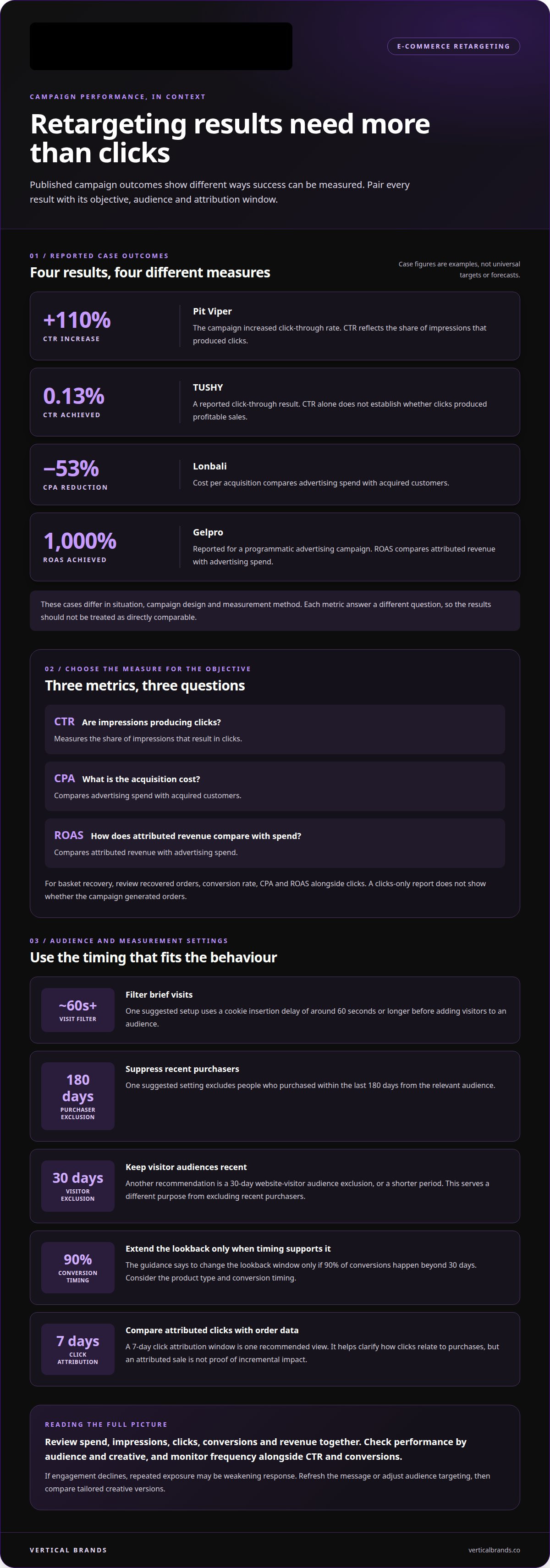
Page value adds context. A specialist might distinguish a homepage visitor from someone who viewed a product, added it to a basket or reached checkout. Visit duration can help separate quick bounces from considered shopping. One suggested setup uses a cookie insertion delay of around 60 seconds or longer, filtering out brief visits before adding people to an audience.
Product-view example: A shopper views a particular coat but leaves without adding it to their basket. A dynamic product ad can show that coat with relevant images and current product details. If the shopper returns, update the audience and stop promoting the item after purchase.
Dynamic product ads draw on a product catalogue and match items to browsing behaviour, making them useful when visitors have viewed different products. Create separate groups for product viewers and basket abandoners, then tailor each message to the shopper’s stage instead of serving everyone the same advert.
Exclusions prevent wasted impressions. One suggested setting excludes pixel purchasers from the last 180 days. Another recommends a 30-day website-visitor audience exclusion, or a shorter period, for remarketing audiences. These settings serve different purposes: suppressing recent purchasers can avoid acquisition ads, whilst a shorter visitor window can keep a campaign focused on recent interest.
Lookback windows should reflect the buying cycle. Some brands use lapsed-visitor audiences when repurchase cycles extend beyond 30 or 90 days. The guidance says to change the lookback window only if 90% of conversions happen beyond 30 days. A specialist weighs conversion timing and product type before adjusting the audience window.
Cross-sell and upsell campaigns target people after a completed purchase. Exclude customers from the original product ad and recommend related items, such as phone cases or headphones after a mobile phone purchase. The follow-up reflects purchase history rather than advertising an item they already bought.
In the UK, retargeting must account for UK GDPR and PECR. Advertising cookies generally require consent before they are placed. Campaigns must also respect people’s data protection rights and explain how their information is used.
Campaign performance metrics, including CTR, CPA and ROAS
A retargeting specialist tracks more than clicks. Click-through rate (CTR) measures the share of impressions that produce clicks. Cost per acquisition (CPA) compares advertising spend with acquired customers. Return on ad spend (ROAS) compares attributed revenue with advertising spend. Each metric answers a different question, so optimisation should start with the campaign objective.
A product-view campaign, for example, may earn a strong CTR but generate few completed purchases. That can point to a mismatch between the advert and landing page, or a gap between interest and purchase intent. For cart recovery, assess conversion and CPA alongside clicks. A clicks-only report doesn’t show whether the campaign generated orders.
Published cases illustrate different outcomes, not universal targets. Pit Viper’s campaign increased CTR by 110%, while TUSHY’s campaign achieved a 0.13% CTR. In both cases, the situation was a need to engage relevant audiences; the action was retargeted advertising; the reported result was a click-through measure. CTR alone doesn’t establish whether those clicks produced profitable sales.
Other cases focus on cost or revenue. Lonbali’s campaign reduced CPA by 53%. Gelpro achieved a 1,000% ROAS in a programmatic advertising campaign. The situation, campaign design and measurement method differ, so these figures shouldn’t be treated as forecasts for another retailer. A tailored assessment pairs each result with its objective, audience and attribution window.
Abandoned-cart retargeting reminds shoppers about products left in their basket, using an advert or email that takes them back to checkout. Measure recovered orders, conversion rate, CPA and ROAS. Results depend on the campaign and attribution method.
Monitoring needs a consistent comparison. A specialist reviews spend, impressions, clicks, conversions and revenue together, then checks whether performance changes by audience or creative. For remarketing, a 7-day click attribution window is one recommended view. Comparing that window with order data helps clarify how clicks relate to purchases, rather than treating every attributed sale as proof of incremental impact.
Ad fatigue can weaken response when an audience sees the same creative repeatedly. Frequency capping limits how often people see an advert. Monitor frequency alongside CTR and conversions, then refresh the message or adjust audience targeting if engagement declines. Testing two tailored creative versions can show which better prompts shoppers to return, without relying on a single metric.
Email remarketing and behavioural targeting
Behavioural email retargeting uses actions such as a product view, an abandoned basket or a previous purchase to shape follow-up messages. A product viewer might receive an email featuring the item they considered; a basket abandoner could get a reminder linking to checkout. Give each message a defined audience and purpose instead of sending the same promotion to every subscriber.
Segmentation changes the relevance of that follow-up. According to SuperOffice data, segmented emails perform almost 40% better than general emails. A specialist can divide subscribers by browsing behaviour, purchase history or inactivity, then tailor the message and product recommendations to each group. For example, a recent buyer could receive complementary product suggestions, whilst a lapsed customer sees a win-back offer.
Zara provides an example of coordinated email and social outreach. The scenario is a past customer who has stopped engaging; the brand contacts past customers through email and social media with offers and promotions. This creates a way to reconnect across channels, though the example does not establish a particular revenue result.
An abandoned-basket email can remind someone what they left behind, show the product and link back to the basket. A discount may provide an incentive, but test it against a reminder without an offer. Comparing the two helps show whether the message brings people back or the discount drives the response.
Email, SMS and push notifications can all support retargeting. A subscriber could receive an email about an abandoned product, while an opted-in customer might get an SMS reminder or an app notification. Keep messages relevant to the same behaviour and avoid duplicate prompts across channels.
A/B testing gives email optimisation a clear structure. Compare two versions, changing one element such as the subject line, product image, offer or call to action. Then assess opens, clicks and purchases against the campaign objective. Changing one element at a time makes the result easier to interpret than changing the subject line and discount together.
Video can extend the same behavioural approach. A retailer might show a product demonstration to people who watched a related video, then email matching products to known subscribers. The scenario is demonstrated interest; the response is coordinated video and email follow-up; the aim is to move that audience closer to purchase. Tailor messages to each audience segment and actual engagement.
Retargeting across the marketing funnel
A full-funnel retargeting plan aligns each audience with a clear campaign objective. Awareness introduces the brand; consideration develops product interest; conversion supports a purchase decision. E-commerce advertisers can also define whether a campaign aims for lead generation, sales conversion or brand awareness. The objective determines the audience, message and performance measure.
At the awareness stage, a retailer can retarget people who engaged with its social content but haven’t visited product pages. Use a brand or category message rather than an immediate discount. The aim is to move interested people towards product discovery. A later campaign can distinguish those who browse from those who leave without engaging further.
At consideration, focus on visitors who explored a product or category. Someone who viewed a particular style, for example, could see a related product demonstration or customer content. For high-consideration purchases, platforms like CarSeek often retarget researchers with detailed buying guides and vehicle reviews to help them evaluate their options. The message should answer likely questions and make the next step clear. Assess whether visitors progress to product details, basket activity or another defined conversion event.
At conversion, a basket abandoner is closer to buying than someone who viewed a category page. Show the selected product and direct the shopper back to checkout, with a completed purchase as the intended result. A discount code or other incentive can support the decision, but it should suit the campaign’s margin and objective rather than become the default for every audience.
Nike illustrates engagement-based funnel targeting. Customers interact with the brand in different ways. Nike uses ad funnels to track those interactions and target groups with different adverts based on engagement. This approach varies messaging by audience behaviour instead of treating every interaction as the same signal.
To build a practical full-funnel structure, map audience signals to the next useful action. A social engagement audience might receive product discovery content; a product viewer might see detailed product creative; a basket abandoner might get a checkout reminder. Define an audience and conversion event for each step so the campaign can show where progress slows.
Campaigns become less efficient when one advert serves every funnel stage. A first-time visitor may need context, while a returning product viewer may need a direct route back to the item. Review audience movement and update exclusions as people progress or purchase. If the message stays unchanged, audiences move through the funnel without a relevant next step.
Measure each stage against its purpose. Assess awareness activity for meaningful engagement, consideration for progression and conversion for completed sales. This prevents a high click-through rate from being mistaken for revenue. A funnel report also shows where revised creative, audience rules or landing-page alignment may be needed.
Retargeting across social media, display and search
A cross-channel retargeting plan connects customer actions across social media, display advertising and search. Each channel has a different role. Social adverts can re-engage people who interacted with a brand; display can remind product viewers as they browse elsewhere; search can respond when previous visitors look for a product again. The strongest structure connects these touchpoints into one customer journey.
Start with the behaviour, then choose the channel. A social engager who hasn’t viewed a product page could see category creative. A product viewer could receive a display advert featuring relevant items. A previous visitor searching for the same product category could encounter a responsive search ad. Adapt its content to where the person previously interacted, keeping the message connected to earlier actions.
TUSHY provides a multi-channel example. The situation was a need to reach relevant shoppers across channels; the action combined retargeting across social media, display and other placements. The campaign generated more than 65,000 unique conversions. That result shows the scale reported for this campaign, not a benchmark for every retailer or channel mix.
Search retargeting can also adjust how previous visitors are approached. World Travel Holdings’ RLSA campaign reportedly increased conversion rates by 300% and ROI by 30%. The action focused on people who had already visited the site, then used search advertising to reach them again. The reported result connects prior site interaction with stronger conversion and return measures in that campaign.
Channel coordination matters. If someone purchases after clicking a social advert, stop showing the same acquisition message in the display campaign. If a visitor moves from a category page to a product page, make the next advert more specific. Shared audience rules help prevent duplicated messages and keep the campaign aligned with changing intent.
Creative should suit the placement as well as the audience. A display unit can foreground product imagery, while a social advert can use a stronger narrative or customer content. Search copy should match the user’s query and direct them to a relevant page. Make sure layouts work on mobile: cramped creative or a poorly matched destination can interrupt the path to purchase.
Measure channels against a shared objective, then review each channel’s contribution. Compare clicks, conversions and revenue alongside audience overlap and frequency. A channel with fewer clicks may still assist conversions elsewhere, so assess attribution across the customer journey. Consistent reporting makes it easier to identify where social, display or search needs a different audience or message.
For a coordinated approach to social and search retargeting, align audience rules, creative and campaign measurement across channels.
Vertical Brands
Vertical Brands helps e-commerce businesses turn retargeting strategy into coordinated campaign activity. Its Paid Social and Paid Search services can support cross-channel execution when audience segments, channel roles and performance measures need to work together. Klaviyo Email Marketing and Email Marketing & CRM Management can connect behavioural signals with relevant email follow-up.
The focus is alignment: matching each audience with a suitable message, coordinating paid channels and assessing campaigns against their objectives. This is a practical next step when you understand the approach but need specialist support to plan and deliver it. The campaign structure is shaped around your business and customer journey, not a standard retargeting sequence for every retailer.
Contact Vertical Brands to discuss your e-commerce retargeting requirements.
Turn retargeting insight into a clear campaign plan
The next decision isn’t which channel to add first. It’s what needs to change in your customer journey and which audience or message can address it. Use these e-commerce retargeting campaign examples as a reference, then shape a plan around your commercial priorities, customer behaviour and available campaign data.
That work takes coordination across channels and a clear operating structure. Vertical Brands offers Klaviyo Email Marketing, Email Marketing & CRM Management and Paid Social to support connected customer communications and campaign delivery. The next step is a focused discussion about where your current approach loses momentum and what you want retargeting to achieve.
Contact Vertical Brands to discuss your campaign priorities and put a practical plan in motion. A sharper strategy starts with the next decision.
Frequently Asked Questions
What Are Retargeting Ads?
Retargeting ads are adverts shown to people who have previously interacted with a brand online. A retailer might show a visitor a product they viewed or promote a related category after they browsed a collection. The campaign uses interaction data to select an audience and tailor the message. In the UK, advertising tracking technologies must follow applicable privacy and consent requirements.
What are some effective e-commerce advertising strategies?
Effective e-commerce advertising combines clear audience targeting, relevant creative and measurement against a commercial objective. A homeware retailer, for example, could use search advertising to capture demand for a specific product category, then use social creative to introduce complementary products to engaged visitors. Product pages should support the advert’s promise with consistent descriptions, imagery and calls to action. Plan channel roles and reporting together.
What are effective e-commerce retargeting campaign examples?
Effective e-commerce retargeting campaign examples connect a specific customer action to a useful next message. A furniture shop could show a room-set image after someone views a sofa, then direct them to matching tables. Similarly, an art retailer such as First4Frames Gallery can direct visitors browsing Scottish landscapes to in-depth artist profiles and bespoke framing options. A repeat customer might receive early access to a relevant category instead of an introductory advert. These approaches tailor follow-up to the shopper’s relationship with the retailer and give each campaign a clear action to measure.
How can a retargeting specialist use dynamic product ads for e-commerce retargeting?
A specialist can use dynamic product ads to select catalogue items based on each person’s browsing or purchase activity. Someone who viewed a particular kettle, for example, could see it alongside relevant alternatives. Align catalogue data, audience rules and creative, then exclude products that are unavailable or already purchased where the setup supports it. This keeps adverts relevant to the shopper’s interests.
Which audience segments and retargeting windows should a specialist choose for an e-commerce brand?
Separate audiences by intent and customer status: category browsers, product viewers, checkout abandoners, recent purchasers and lapsed customers. Set the audience window to reflect how quickly customers typically decide and how often they buy the product. A product with a short decision period may suit recent interactions; considered purchases may need a longer window. Audience size, conversion timing and repeat-purchase patterns guide the structure.
What are typical e-commerce retargeting conversion rates, ROAS, and costs?
No single performance figure applies across all e-commerce brands. Conversion rate depends on audience intent, product, offer and checkout experience; ROAS also reflects margin, attribution and advertising spend. Media costs shift with auction competition, placement and audience demand. Assess these measures against the campaign objective and retailer’s economics, rather than treating another brand’s result as a forecast.