Photo by Fallon Michael on Unsplash
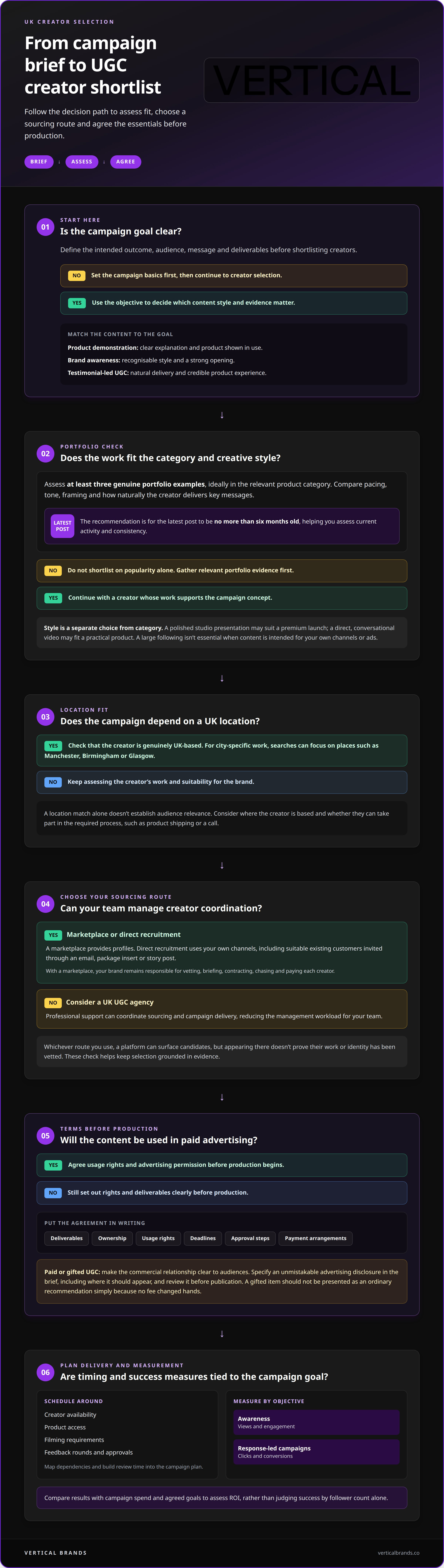
Follower count isn’t the starting point. To find UGC creators in the UK, begin with your campaign goal, the creator’s fit for your product and a clear agreement on how you can use the content. UGC is often made for a brand’s own channels and advertising, so agree usage rights before production begins.
A creator marketplace can make discovery easier, but finding a profile is only one step. You still need to assess the work, align on the brief, agree terms and manage delivery. Set out the rights and deliverables clearly, especially if you plan to use videos in paid ads.
This guide explains how to find UK creators through marketplaces and social searches, assess their portfolios and audience fit, and choose a style suited to your campaign. It also covers usage rights and advertising permission, plus how professional creator sourcing can reduce the workload for your team.
Key Takeaways
- Match creator selection to the campaign goal, product niche and content style, not follower count alone.
- Assess portfolios for relevant examples and a consistent creative approach before shortlisting creators.
- Use platform searches and social discovery to identify UK-based talent, then have a professional manage vetting, briefs and delivery.
- Agree deliverables, ownership and permission for paid advertising before content production begins.
- A creator’s portfolio and recent work helps reveal whether their content fits your brand and campaign.
How professionals choose UGC creators by niche, style and campaign goal
Start creator selection with the campaign’s intended outcome, not a follower count. For product demonstrations, look for creators who explain the product clearly and show it in use. For brand awareness, prioritise a recognisable style and a strong opening. For testimonial-led UGC, consider natural delivery and credible product experience. Define the audience, message and deliverables before shortlisting anyone.
Niche fit makes the brief more relevant. A skincare campaign, for example, needs creators comfortable showing a routine, while a homeware campaign may depend on practical demonstrations. Professionals assess at least three genuine portfolio examples, ideally in the relevant product category. They also review the creator’s latest post: the recommendation is that it should be no more than six months old. This helps assess current activity and consistency.
Style is a separate decision from category. A polished studio presentation may suit a premium launch, while a direct, conversational video may fit a practical product. Compare pacing, tone, framing and how naturally the creator delivers key messages, then match that evidence to the campaign concept. A large following isn’t essential for UGC when the content is intended for your own channels or ads.
Turn the match into a clear opportunity with a campaign brief that covers the product, audience, concept, required formats, deadlines and approval stages. Set relevant criteria, such as category, location and creative style, so applications reflect the work. Ask applicants to provide portfolio links, availability and their proposed approach. This keeps selection focused on evidence rather than generic claims.
For paid UGC and gifted products in the UK, make the commercial relationship clear to audiences. Include an unmistakable advertising disclosure in the brief, specify where it should appear, and review it before publication. A gifted item should not be presented as an ordinary recommendation simply because no fee changed hands. This is a practical campaign safeguard, not a substitute for advice on specific circumstances.
Delivery timing depends on creator availability, product access, filming requirements, feedback rounds and approvals. Map those dependencies before confirming a schedule, and build review time into the campaign plan. Match measurement to the objective: track views and engagement for awareness, or clicks and conversions for response-led campaigns. Compare results with campaign spend and agreed goals to assess ROI, rather than judging success by follower count alone.
How professionals find vetted creators through a platform
A platform can centralise creator profiles, applications and campaign communication. Professional support adds screening and coordination, helping your team focus on talent that fits the brief.
Translate the campaign brief into platform filters covering product category, content format, location, availability and relevant portfolio work. The shortlist should reflect the campaign’s requirements, not profile popularity alone. A platform can surface candidates, but appearing there doesn’t prove their work or identity has been vetted.
There are three main routes: hire a UK UGC agency for managed sourcing, use a marketplace to access profiles, or recruit directly through your own channels. With a marketplace, brands remain responsible for vetting, briefing, contracting, chasing and paying each creator. Professional support can suit campaigns where that coordination would otherwise fall to your team.
Existing customers can become creators too. Identify suitable customers and invite applications through an email, package insert or story post. Explain the product, content needed, selection criteria and application process. Customer familiarity can bring useful product experience, but applicants may need clear direction on briefs and deadlines.
Selecting UK Creators by Location
Location screening starts with the campaign’s practical needs. A professional assesses whether creators are genuinely UK-based, particularly when products need shipping or a brief requires a call. For a city-specific campaign, searches can focus on locations such as Manchester, Birmingham or Glasgow, then assess each candidate’s content and suitability.
A location match alone doesn’t establish audience relevance. Consider where the creator is based, whether they can take part in the required process, and whether their work suits the brand. This separates a useful location match from a profile that merely mentions a UK city.
Checking Authenticity and Avoiding Scams
Compare the creator’s profile, portfolio and application for consistency. Check that the name and social account align across submitted materials, and that the applicant can explain their portfolio examples. A short discussion about their approach can show whether they understand the brief and can deliver the proposed content.
Before a campaign progresses, clarify deliverables, deadlines, approval steps and payment arrangements in writing. Keep communication within an agreed channel and review submitted work against the brief. These checks help identify mismatched profiles and reduce confusion during delivery.
The main difference between the options is workload: a marketplace provides profiles, direct recruitment uses your existing channels, and an agency can coordinate sourcing and campaign delivery. Choose the route that matches how much management your team can take on.
When campaign sourcing and delivery need to run as one process, managed UGC creator sourcing can connect creator selection with the content required for the campaign.
How professionals use Instagram and TikTok hashtag and location searches to find UGC creators
Instagram and TikTok can help you discover creators beyond marketplace profiles. Combine niche hashtags, location clues and campaign criteria, then assess each profile against your brief.
Browsing Creator Profiles
Pair a product category with terms such as “UGC UK”, then narrow results using relevant niche hashtags. A skincare brief, for example, could lead to creators posting skincare routines and product demonstrations. Browse Instagram and TikTok profiles to see how creators present products, structure footage and speak to an audience.
Portfolio fit matters more than a polished profile alone. Look for work that demonstrates the required format, tone and product context, then assess whether the creator’s approach could deliver the campaign concept. Ask applicants to share their proposed angle and availability so you can compare responses with the brief instead of relying on profile descriptions.
Checking Audience Location and Demographics
For influencer-style campaigns, professionals assess audience location alongside the creator’s content. Listed figures for UK creators vary: Olivia Elkashef’s audience is 49% in the United Kingdom, Amy Woodward’s is 65%, Charlotte Hooks’ is 67%, and Paul Stancliffe’s is 80%. These examples show why a UK-based profile doesn’t automatically mean its audience is predominantly UK-based.
Audience fit depends on the intended customer, not location alone. Consider available demographic information and compare it with your intended market. For UGC made for your own channels, a large following isn’t essential: the creator’s ability to produce relevant footage may matter more than reach.
Confirming Location and Responsiveness
A location tag or British setting can be a useful clue, but it doesn’t establish where a creator lives. Confirm their UK location during the application or briefing process, particularly if the campaign involves shipping products or arranging calls. City details can help with coordination, but campaign fit remains the selection criterion.
Responsiveness becomes clear during the enquiry and application process. The supplied creator examples include Helen Marasha, who usually replies to a new enquiry within an hour, and Chloe Smith, who recently left brands waiting more than two days for a first reply. Record response patterns and consider whether communication supports the campaign schedule.
Instagram and TikTok searches help with discovery, but they aren’t a complete screening system. Organise shortlisted profiles by niche, location, audience relevance and communication, then assess each against the campaign’s actual requirements. This helps distinguish a promising social profile from a suitable content partner.
UK brands can find potential UGC creators by searching niche hashtags alongside “UGC UK” on Instagram and TikTok, then assessing promising profiles against the campaign brief.
How does it work with usage rights?
Agree usage rights before a creator films, not after they deliver the video. Get the creator’s permission before using UGC in advertising or marketing. Make clear whether the brand receives a licence or ownership, and specify exactly what that covers.
A UK UGC creator contract should set out deliverables, payment terms, deadlines, the approval process and permitted uses. Specify whether permission covers your website, social media, TikTok, email or paid advertising. If you need several channels, name each one. Clear terms reduce disputes about what the original brief allowed.
“Usage rights” can describe different arrangements. A licence gives the brand permission to use content under agreed terms; an ownership transfer is a different arrangement. State which applies, who can use the videos and whether use can continue after the campaign ends. Delivery of a file does not, by itself, grant permission for unlimited use.
For paid social, state whether the brand can run the creator’s video as an advert, which accounts can publish it and whether edits are permitted. For example, you might need to crop a TikTok video into a shorter placement. Cover those edits in the agreement, along with captions, subtitles, cut-downs and any other planned adaptations.
Specify how long the brand can use the content and where it can appear. If a campaign targets UK customers through UK social accounts, describe that intended use in the agreement. If plans later expand to other markets or channels, secure the necessary additional permission before reusing the content.
Include production materials in the agreement. A creator may film original footage, add music or include other identifiable material. Clarify which elements the brand can use and whether the creator can supply versions without third-party additions. Permission for a finished video does not automatically cover every component.
Connect usage rights to the production workflow. The brief should name the deliverables, file format, review stages and turnaround expectations. The agreement can then define when the brand receives final files and when usage permission begins. For example, you could approve a draft before final delivery while keeping the agreed campaign channels clear throughout.
Before publishing, compare the planned placement with the written permission. A video approved for an organic social post isn’t cleared for paid ads unless the agreement says so. Keep the brief, permission and final approved version together, giving the campaign team a clear basis for using each video.
How professionals search a UK creator marketplace
UK brands can find UGC creators through marketplaces, agency-managed sourcing and social platforms. A well-run marketplace search turns campaign requirements into filters, then assesses each profile against the intended content and audience. If you’re considering how to find UGC creators in the UK, match your discovery method to the campaign’s actual needs.
Start with the campaign objective. A conversion-focused product demonstration needs a clear explanation and useful product footage. A brand-awareness campaign may prioritise distinctive presentation and strong storytelling. Translate those needs into marketplace criteria, including niche, location, format and availability. This keeps the search focused on the marketing task, not the largest profile.
Review how each marketplace organises creator information. Useful profile details include portfolio examples, content categories, location and previous brand work. Assess the work itself rather than treating a marketplace label as proof of quality. A creator whose videos suit a beauty launch may not fit a homeware brief, even if both profiles appear under lifestyle.
Applications turn profile discovery into a structured shortlist. Ask candidates to respond to the same brief, outline their creative approach and confirm their availability. You can then compare proposed concepts, communication and relevant examples on consistent terms. Assess the shortlist against campaign deliverables, not broad popularity claims.
Marketplace choice also depends on the support you need. A marketplace provides access to creator profiles, while an agency can manage sourcing and coordination. Brands using a marketplace remain responsible for vetting, briefing, contracting, chasing and paying each creator. Consider that workload when several creators need separate approvals or staggered delivery.
Before inviting creators to collaborate, check that the brief is operationally complete. Define the product, content format, key message, required assets, review process and intended use. If the campaign aims to improve conversion, make sure the concept and call to action support that objective. For paid placements, specify the required advertising permission before production.
A marketplace search works best when selection connects to delivery. Track applications, approved concepts, production stages and outstanding feedback in one workflow. This can surface delays early, such as a product arriving after filming was planned, and helps keep creator output aligned with the campaign schedule and marketing requirements.
Choosing how to find UGC creators in the UK comes down to the level of coordination your team needs. Use a marketplace when profile access is the priority; choose managed support when you need a coordinated shortlist and workflow. Arrange professional UGC creator sourcing to connect creator selection with campaign delivery.
Vertical Brands
Vertical Brands helps brands turn creator discovery into a campaign plan with clear objectives, content requirements and delivery stages. If your team needs professional support connecting UGC with wider digital marketing activity, it can help you manage the work without handling every campaign detail alone.
Creator content works best when it has a defined role in the customer journey. A campaign might support paid social, while Klaviyo Email Marketing or Email Marketing & CRM Management can help you plan how content fits into customer communications. The right approach depends on your goals, audience and channels.
Bring your campaign objective, target audience and intended content use into the discussion. Vertical Brands can help shape the next steps around those requirements. Contact Vertical Brands to discuss your UGC creator campaign.
Turn creator discovery into your next campaign decision
Knowing how to find UGC creators in the UK is a starting point, not a campaign plan. Decide what role creator content should play in your marketing, then set a clear direction for how it will be produced and used. That gives your team a practical basis for commissioning work and assessing its contribution to the wider brand strategy.
Consider how creator content could work alongside your existing channels and campaigns. Vertical Brands can connect that planning with relevant digital marketing support, including paid social, Klaviyo Email Marketing and Email Marketing & CRM Management. The right next move depends on your campaign objectives and how creator content fits into the customer journey.
When you’re ready to put that plan into motion, start a conversation with Vertical Brands. A clear brief gives the discussion focus and helps your next campaign take shape.
Frequently Asked Questions
Can I hire multiple UGC creators in UK for one campaign?
Yes. A brand can commission several creators when each has a distinct contribution, such as demonstrating a different product use or speaking to a separate customer segment. Coordinate shared campaign messaging while assigning individual concepts and deliverables. This creates creative variety without making every video feel identical. Keep one central brief, then tailor the content direction for each creator.
Which UK UGC creator platforms and marketplaces are best?
No single marketplace is best for every UK campaign. Compare how each platform supports relevant discovery, creator applications, profile review and campaign administration. A marketplace provides access to profiles, while agency support can take on coordination. You can also identify potential creators among existing customers. Choose the route that matches your team’s capacity and the campaign’s management needs.
How can a professional find UK UGC creators on TikTok, Instagram and LinkedIn?
On TikTok and Instagram, combine niche hashtags with “UGC UK”, then review relevant creator profiles and portfolio examples. LinkedIn can offer another professional discovery route: search for creator profiles and work samples that match the campaign category. Across all three channels, shortlist creators whose content style and product fit meet your needs. A strong profile is a lead to assess, not a hiring decision by itself.
How does a professional brief and hire a UGC creator in the UK?
Turn the campaign objective into a brief covering the product, audience, concept, deliverables, review process and intended channels. Invite suitable creators to apply, compare their proposed approaches, then agree scope and terms before filming starts. For example, a launch brief might request a product demonstration and a customer-problem-led concept. Clear feedback stages help creators deliver against the campaign without repeated changes in direction.