Photo by Stefanus Stefanus on Unsplash
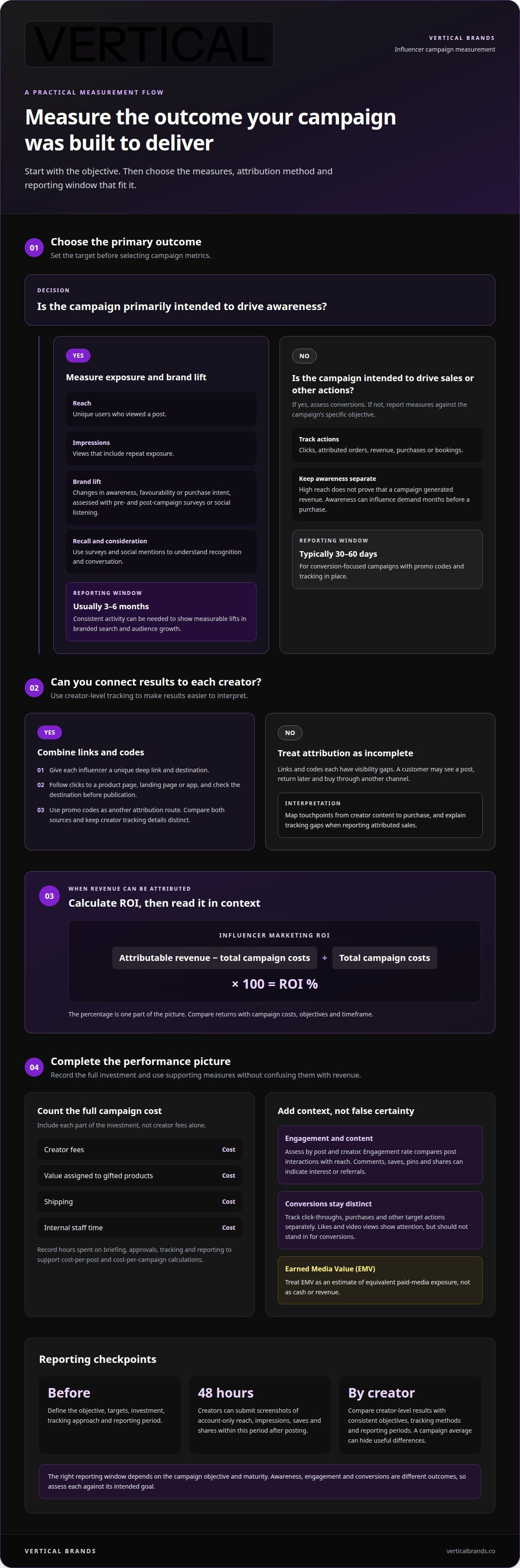
A high sales figure doesn’t prove an influencer campaign delivered a return. To understand how to measure influencer marketing ROI, subtract total campaign costs from attributable revenue, divide the result by total costs, then multiply by 100. The result is a percentage, but it only tells part of the story.
It’s reasonable to expect clear evidence of performance. The challenge is that sales alone may not capture awareness, engagement or the influence of content across platforms. Calculations are most useful when the metrics match the campaign’s objective and the way your brand sells.
This guide explains which measures to track across awareness, engagement, conversions and content, and how to attribute results using creator-specific links and codes. It also covers how to assess earned media value without treating it as cash or revenue, and how to interpret returns against campaign costs, goals and timeframe.
Key Takeaways
- Build campaign costs around creator fees, gifted products, shipping and staff time to assess the full investment.
- Match awareness, engagement, conversion and content measures to the campaign objective and sales model.
- Combine creator-specific links and promo codes to attribute sales across platforms, while accounting for gaps in tracking.
- Treat Earned Media Value as an estimate of equivalent paid-media exposure, not as cash or revenue.
- Compare returns with campaign costs and objectives; the right benchmarks depends on the campaign’s timeframe and maturity.
What metrics should you track for influencer campaigns?
Set the campaign objective first, then choose measures that show progress towards it. Record the investment, tracking approach and reporting period before activity begins, so performance has a clear basis for assessment.
-
How a specialist sets campaign goals and chooses metrics
Define the outcome before selecting campaign metrics. To measure influencer marketing ROI, link each target to a business objective. Awareness campaigns can assess reach, impressions and brand lift; sales campaigns can focus on attributed orders and revenue. Check that each target is specific, measurable, achievable, relevant and time bound. Measures should also reflect whether the brand sells through e-commerce or retailers, since routes to purchase differ.
-
How a specialist tracks results with deep links
Assign each influencer a unique deep link and destination. Use tracking information to follow clicks to a product page, landing page or app, then check the destination before publication. This helps connect creator content with subsequent traffic and actions. Promo codes provide another attribution route, but links and codes each have visibility gaps. Compare both sources and keep each creator’s tracking details distinct, so results can be traced to the right campaign activity.
- Build a complete cost record for every influencer campaign. Include creator fees, the value assigned to gifted products, shipping and internal staff time. Record hours spent on briefing, approvals, tracking and reporting alongside the relevant costs. This gives the team a fuller view of total investment and supports cost-per-post and cost-per-campaign calculations. A complete cost record also makes it easier to identify which parts of campaign delivery account for the investment.
- Test a short burst of activity with multiple influencers, then compare creator-level results. Keep campaign objectives, tracking methods and reporting periods consistent, so differences are easier to interpret. A campaign average can conceal which creator or post generated useful clicks, saves or shares. For teams assessing how to measure influencer marketing ROI, creator-level reporting helps identify partnerships for further testing and content that needs a different approach. It also makes comparisons between creators more meaningful. To streamline this process, brands often partner with creator agencies such as Indie Collaborates to engage vetted creators for performance-led campaigns.
- Set reporting timelines to match the campaign objective. Conversion-focused campaigns with promo codes and tracking in place typically show ROI within 30-60 days. Awareness campaigns usually take 3-6 months of consistent activity to show measurable lifts in branded search and audience growth. Judge performance against the relevant window, rather than immediate sales alone. Creators can also submit screenshots of account-only reach, impressions, saves and shares within 48 hours after posting.
Awareness, engagement, conversion and content metrics
Measure awareness and engagement using at least two measurement layers, then match each to the campaign objective. For awareness, brand lift can matter more than immediate sales when commercial outcomes are months away.
-
Measure awareness and brand lift
Set an awareness baseline, then measure changes after influencer marketing campaigns run. Reach counts unique users who viewed a post; impressions include repeat views. A brand-lift study can assess changes in awareness, favourability or purchase intent through pre- and post-campaign surveys or social listening. Compare the same measures across both periods. This helps distinguish increased exposure from a change in how people perceive the brand.
-
Track brand consideration and recall
Measure whether people recognise and consider the brand, not only whether they buy immediately. Surveys can assess whether exposed audiences remember the brand or associate it with the featured creator. Social mentions provide another signal of conversation and recognition. Compare responses before and after the campaign, and segment findings by target audience where the data supports it. This connects brand awareness to consideration without treating either as a completed sale.
-
Separate awareness from conversions
Report awareness and conversions as distinct outcomes. Awareness metrics show exposure or changes in brand perception; conversion metrics record actions such as clicks, purchases or bookings. An awareness campaign may influence demand months before a customer buys, so immediate sales alone can miss its contribution. Conversely, high reach does not prove that a campaign generated revenue. Present each result against its intended objective, then explain how the measures fit together.
-
How a specialist assesses engagement, conversion and content metrics
Assess engagement by post and creator. Engagement rate compares post interactions with reach; comments, saves and pins can indicate deeper audience interest, while shares can signal referrals. Likes and video views help identify content that attracts attention, but should not stand in for conversions. Track click-throughs, purchases and other target actions separately. Audience growth adds another measure of changing reach. These metrics show which content connects with audiences and which actions follow.
For a rounded performance view, a specialist combines quantitative measures such as reach, impressions and conversions with qualitative signals such as brand sentiment and creator-audience fit. Influencer marketing measurement can align these measures with campaign objectives and reporting.
Attribution across platforms
Map each campaign touchpoint, from creator content to purchase, before assessing attributed sales. A customer may see a post on social media, return later and buy through another channel.
-
How a specialist maps attribution across platforms
Build a route map for each influencer campaign, showing where the audience sees content and where it can act. A creator’s post might link to a product page, while a platform’s own shopping feature may record purchases directly. Include social media, landing pages and e-commerce integrations in the map. Check that tracking follows the customer journey across these points, rather than treating each platform as an isolated source.
-
How a specialist applies multi-touch attribution
Use multi-touch attribution to assess more than the final click. Review the sequence of interactions before a sale, such as viewing a creator post, clicking a tracked link and returning through a later visit. An attribution tool can help connect these touchpoints across platforms. The model should make clear how each interaction receives credit. Otherwise, the report may overvalue the final channel and understate the influencer’s earlier role.
-
How a specialist tracks sales attribution
Assign each creator a unique tracking link and promo code, then compare the sales each method records. A code can capture a purchase without a tracked click, while a link can show traffic and subsequent actions. Platform and e-commerce integrations add further visibility. However, tracked sales on creator platforms are typically two to three times the sales reported, partly because organic reposts and in-store shopping can escape attribution.
- Reconcile the different records before reporting revenue. Compare creator-specific codes, link activity and platform purchase data, then identify overlaps. For example, one order might appear in both a promo-code report and an e-commerce integration. Counting it twice inflates campaign results. The report should show which source assigns credit and which sales remain outside that method’s view. This keeps attributed revenue distinct from total sales during the campaign period.
- Separate direct conversions from assisted influence. Some platforms let customers buy directly, bypassing an e-commerce website and recording a conversion within the platform. Other customers may see content, search for the brand later, then purchase through a different route. A specialist reports both tracked outcomes and relevant journey evidence. These records shows where tracking is strongest, where platforms create gaps, and how influencer activity contributes beyond last-click sales.
- Set the attribution approach before campaigns go live, then apply it consistently across creators. If one influencer uses a promo code and another relies only on link clicks, their sales figures are not directly comparable. Record the method attached to each result and distinguish attributed sales from broader campaign performance. This gives decision-makers a clearer basis for judging creator contribution, adjusting platform investment and refining the next campaign.
Earned Media Value (EMV)
Use Earned Media Value (EMV) to estimate the paid-media cost of influencer content exposure. Treat it as a comparison measure, not cash, revenue or proof of purchase.
- Define what the EMV figure represents before adding it to a report. EMV estimates the paid-media cost of exposure generated by creator content. It does not show money received, sales made or profit earned. Keep it separate from attributed revenue, even when both measures appear in the same campaign summary. This distinction prevents an exposure estimate from being presented as a commercial result.
- Record reach and impressions from each platform’s analytics. Reach counts unique users who viewed content, while impressions include repeat views. Use impressions in the EMV calculation, not follower totals. A creator’s follower count describes potential audience size, but doesn’t show how many people saw a specific post. For example, a post’s actual impressions may differ from the creator’s total followers.
- Apply a platform CPM benchmark to impressions, then use an engagement weighting. CPM means cost per thousand impressions. Start with impressions multiplied by the relevant platform CPM benchmark, then adjust the estimate using the stated weighting. Document both inputs and the method used. Without those details, readers can’t interpret what the resulting EMV represents or compare it responsibly.
- Keep the calculation consistent across posts and platforms. If Instagram and another platform use different CPM benchmarks, report each benchmark beside its corresponding impressions. Avoid applying one platform’s benchmark to every post without explanation. State whether the engagement weighting reflects interactions such as comments, saves or shares. Those choices affect the estimate, so a report should show them rather than present one unsupported total.
- Show EMV alongside engagement, reach, conversions and content results. A high estimate may indicate substantial exposure, but it cannot establish that viewers considered a purchase. Compare it with campaign objectives: awareness activity may use EMV as supporting evidence, while sales activity needs sales attribution. The combined view distinguishes media exposure from commercial outcomes and explains the role each metric plays.
- Report the benchmark, weighting and compliance status for every post. Include the platform, creator, date range and data source behind each figure, so the estimate has a traceable basis. If a campaign includes fifteen content assets, assess their exposure individually before summarising the total. A single campaign-wide number can hide variations between posts. These details help readers understand how the estimate was produced.
- Use EMV as a directional comparison, not a precise financial return. A change in CPM benchmark or engagement weighting can shift the estimated value without changing actual sales. Keep EMV outside revenue totals and ROI calculations unless the report clearly labels it as an estimate. This preserves a clear distinction between exposure value and money attributable to influencer activity.
Average influencer marketing returns
- Use industry averages as context, not a forecast. These figures describe different performance levels, not a promised result for an individual brand. Compare them only after defining what counts as revenue, campaign cost and attributed sales.
- Compare influencer results with other marketing channels over a similar timeframe. Use consistent definitions for revenue, costs and attribution, then compare the campaign with your brand’s own social media marketing results. A sales-led campaign and an awareness campaign won’t share identical success measures. Include comments or reach only when they connect to the objective, rather than comparing engagement directly with sales.
- For UK campaigns, include each post’s disclosure compliance status in the campaign report. Assess disclosure separately from ROI: a return figure does not show whether promotional content was properly identified. The report should make the status visible alongside creator and post performance, so commercial results aren’t treated as a substitute for disclosure checks.
- Interpret a first campaign against its starting conditions. A 2-3x return is described as solid territory for a first influencer campaign, whilst brands that have iterated across multiple rounds may see 5x or more. Use these benchmarks to frame discussion, not to rank creators without context. Audience fit, campaign objective, timeframe and measurement method all affect the result.
- Compare like with like before changing spend. A specialist reviews creator-level performance, campaign costs and the selected attribution method, then checks results against benchmarks prepared in advance. Short-term sales may not capture the effect of awareness activity, where branded search and audience growth can take 3-6 months of consistent activity to show measurable lifts.
- Avoid common measurement mistakes: counting estimated Earned Media Value as revenue, overlooking gifted products or staff time, and treating every tracked sale as incremental. Promo codes and links can miss purchases made through other routes. Report data sources, date ranges and tracking methods beside each figure, then compare the findings with similar campaigns. Benchmarks are more useful when measurement rules stay consistent.
- Use returns to guide the next test, not as a standalone verdict. If a campaign generated revenue but missed its awareness target, assess both outcomes against their separate objectives. If engagement was strong but conversions were limited, review the path from creator content to purchase. Improve influencer campaign measurement by aligning its reporting with the objective and attribution method.
Vertical Brands: Influencer Marketing
Vertical Brands helps businesses plan influencer campaigns and assess performance against clear objectives. Turn to its Influencer Marketing service when creator selection, campaign execution and measurement need to work as one system.
Measurement can also connect creator activity with wider marketing operations. Paid Social can extend influencer content into paid campaigns, while Email Marketing & CRM Management can help assess how campaign engagement relates to customer activity. The right combination depends on your objectives and sales journey. Clear targets, consistent tracking and creator-level reporting make results more useful for future decisions.
For a structured approach to campaign planning and measurement, contact Vertical Brands.
Turn campaign measurement into the next decision
Use your measurement framework to decide what happens after each campaign. Define in advance which findings would lead you to scale activity, adjust the creative approach or pause a tactic. That turns reporting into an operating decision, rather than a document that sits unused. A disciplined approach to measuring influencer marketing ROI also gives teams a shared basis for planning future activity.
Influencer activity can sit alongside other channels in the customer journey. Vertical Brands offers Paid Social, Klaviyo Email Marketing and Email Marketing & CRM Management, which can support a connected approach to campaign activity and customer communications. The right mix depends on your objectives and how your audience moves from discovery to purchase.
For a clear next step, contact Vertical Brands to discuss your campaign. A focused discussion can help turn the measurement approach into a practical plan for your next decision. Your next campaign starts with a sharper brief.
Frequently Asked Questions
What is influencer marketing ROI?
Influencer marketing ROI compares the value attributed to a campaign with its total investment. A positive percentage indicates that attributed revenue exceeded recorded costs under the calculation used. It is not a complete measure of every effect: an awareness campaign may influence future demand without producing immediate purchases. Interpret the figure alongside the objective, attribution method and reporting period, rather than treating one result as a universal measure of success.
How does a specialist attribute actual sales to creators?
A specialist connects creator-specific tracking data with completed orders, then checks for duplicate or misassigned sales. For example, an order may include a creator’s code but arrive after a tracked link from another channel. The report should make the attribution rule clear and distinguish confirmed orders from assisted customer journeys. This gives brands a more defensible view of creator contribution without claiming that every sale followed one path.
What should a campaign report actually contain?
A useful report identifies its date range, data sources and attribution method beside the figures. It should show creator-level performance, not only a campaign average, and separate results by platform and post. For a sales-led campaign, include attributed orders and revenue; for awareness activity, include brand-lift findings where measured. Add disclosure status for each post, plus a short explanation of which decisions the results support.
How does a specialist calculate influencer marketing ROI?
Subtract total campaign costs from attributed revenue, divide the result by total costs, then multiply by 100 to express ROI as a percentage. This example illustrates the formula only. The result depends on consistent cost and attribution records.
Which KPIs should you track for influencer marketing campaigns?
Choose KPIs to match the campaign objective and how the brand sells. A campaign focused on reach may use unique viewers, impressions and audience growth. A consideration goal may also assess survey responses, sentiment or branded search activity. For purchase-led campaigns, track clicks, orders and revenue attributed through the selected method. Keep engagement indicators, such as comments and saves, distinct from commercial outcomes so each KPI answers a clear question.
How does a specialist attribute sales and conversions to influencers?
Use creator-specific links and promo codes to connect actions with individual influencers, then reconcile those records against platform or e-commerce data. For instance, social platforms can record purchases made directly without an e-commerce website visit. A code may capture a later purchase that a link misses. Reporting should identify overlaps and state whether the figure represents direct conversions, assisted activity or both.
What is a good influencer marketing ROI benchmark in the UK?
A first campaign may be at a different stage from an established programme refined over multiple rounds. Compare results with similar objectives, timeframes and attribution methods. A benchmark without those conditions can obscure whether performance is improving for your brand.
How do influencer fees and campaign costs affect ROI?
Every campaign cost reduces the return calculated against its attributed revenue. Include creator fees alongside gifted product value, shipping and internal time spent managing the work. For example, a campaign can generate strong sales yet show a lower ROI once these operating costs are included. Review cost per creator as well as total campaign spend; this can reveal whether one partnership uses budget more efficiently than another.