Photo by Alexander Startsev on Unsplash
A loyalty program strategy is a plan for why customers should come back, what you give them when they do, and how you know it pays. The programme itself (points, tiers, a membership) is the smallest part. The strategy sits behind it: the customer segments you want more from, the data you collect, the messages that keep members active and the numbers that prove it works. Brands that treat it as a retention system rather than a discount scheme get more from it, and that is how we build them at Vertical.
TL;DR
- Start with the behaviour you want (a second order, a rebooking, a higher basket), then choose the mechanic. Do not start with the software.
- Pick one simple model first. Points suit frequent low-value baskets, tiers suit a wide spread of customer value, paid membership suits predictable repeat buying.
- Most members go quiet quickly. Klaviyo’s CRM guide cites research that 74% of members stop engaging after two months, so email, SMS and segmentation matter more than the rewards table.
- UK rules apply: marketing consent under PECR, clear points terms and honest pricing claims.
- Measure cohorts, repeat rate and margin after rewards, not member numbers.
Table of Contents
- What a loyalty strategy has to achieve
- Choose the model that fits how your customers buy
- Examples of ecommerce loyalty that work
- Design the rewards economics
- Keep members active: the loyalty loop
- UK rules to build in from the start
- Measure whether it pays
- A launch plan in six steps
- Our perspective
- Bringing it together with Vertical
- FAQ
- Sources
What a loyalty strategy has to achieve
A programme earns its place when it changes what customers do. For most ecommerce brands that means three things:
- More customers placing a second and third order.
- Higher order value or frequency from the customers who are already most valuable.
- A first-party data set (preferences, purchase history, birthdays) that makes every email and ad more relevant.
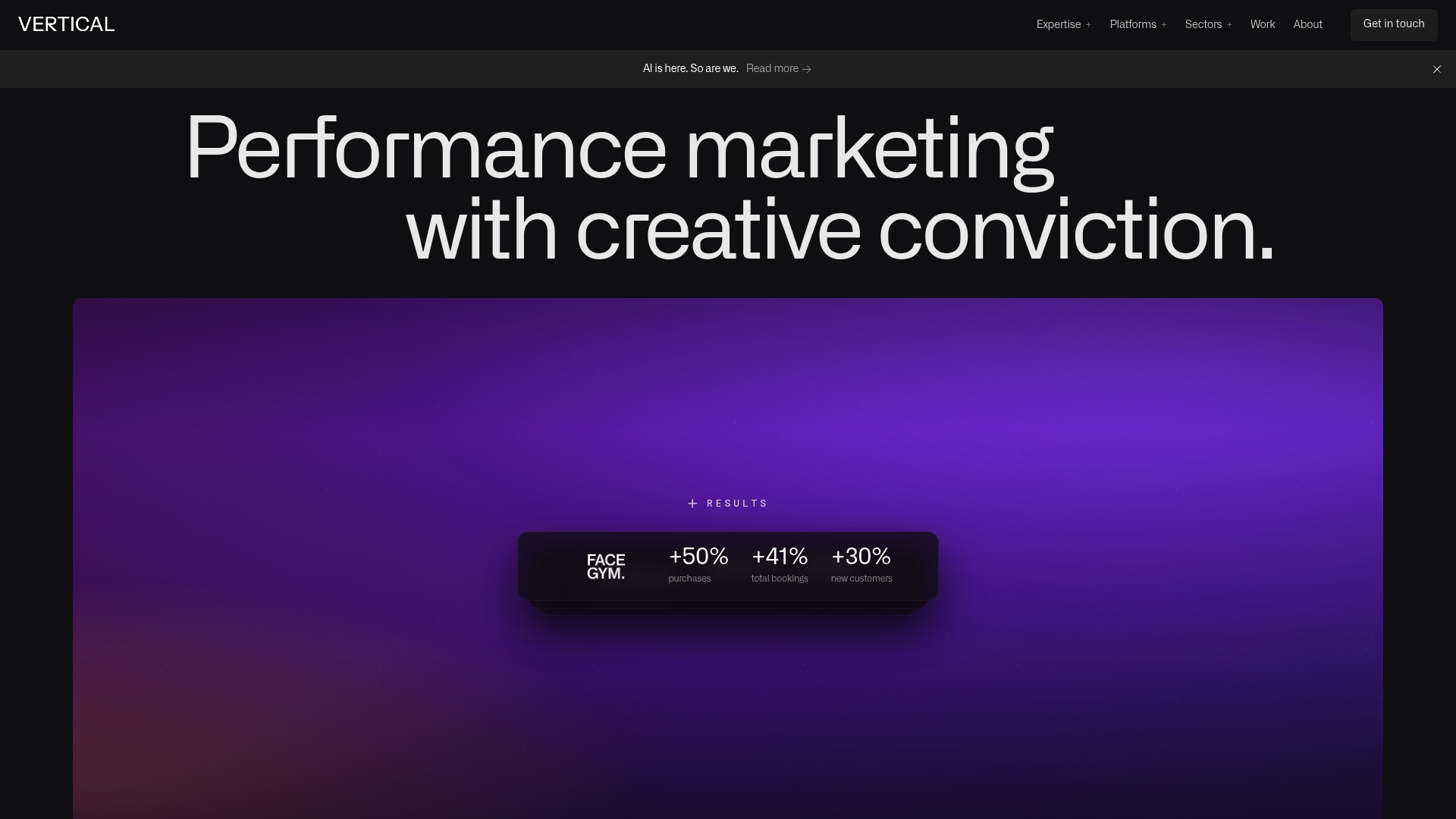
For consumer service businesses, such as clinics, studios and salons, the same logic applies to rebookings and add-on purchases. Our clients such as FACEGYM have reported a 50% increase in purchases and a 41% rise in bookings working with us, and retention is the part of the funnel where that kind of result compounds.
Write one sentence before you design anything: “We want [segment] to do [behaviour] more often, and we will fund it with [margin or budget].” Every later decision gets tested against that sentence.
Choose the model that fits how your customers buy
There is no single best structure. Xero’s guide for UK small businesses lists eight common models: points, tiered, paid membership, value-based, referral, cashback, gamification and community. In practice the choice comes down to your purchase pattern.
| Model | Best when | What to watch |
|---|---|---|
| Points | Frequent, lower-value baskets (beauty, food, consumables) | Points value must be easy to explain and cheap enough to fund |
| Tiers | Wide gap between your best and average customers | Status rules (rolling 12 months or calendar year) must be clear |
| Paid membership | High-frequency, predictable repeat (subscriptions, coffee, supplements) | Benefits must clearly outweigh the fee |
| Referral | Considered purchases where customers recommend you | Reward both sides, track attribution |
| Value-based | Brands with a strong stated position | Needs a real, visible commitment |
| Hybrid | Established stores with data to segment on | Layer in stages, not all at once |
Tiers work best when the top level feels worth reaching. Zendesk gives an example of a top tier unlocked after £10,000 of spend in a year, with exclusive pricing on the most expensive products and services. The principle transfers to smaller brands at smaller thresholds: set the top tier where your best 5 to 10% of customers already sit, so it recognises real behaviour.
Start simple, then layer
Mature programmes usually end up hybrid: credit on purchases, tiers for status and a referral mechanic. The mistake is launching all three on day one. A scheme with three mechanics is hard to explain to customers and impossible to attribute afterwards, because you cannot tell which lever moved repeat rate. Launch points or a single tier ladder, read the data for a quarter, then add the next layer.

Examples of ecommerce loyalty that work
Strong programmes tend to share a few traits, and you can apply them whatever your size:
- Rewards beyond discounts. Early access to a launch, a first look at new products or a members-only event often costs little and feels more valuable than 5% off.
- Earning for more than purchases. Points for a review, a referral, a social follow or a returned item for recycling widen engagement between orders.
- Data collection built in. A skin or taste quiz that rewards points gives you zero-party data (information customers choose to give you) and a reason to personalise.
- A reward customers can reach quickly. A first reward within one or two orders keeps momentum before the two-month drop-off arrives.
- Inclusion of one-time buyers. Locking every benefit behind a subscription excludes the customers you most want to convert. Points tied to order value let anyone start earning.
A subscription example: a drinks subscription can give a free product on one renewal, a credit on another and event access, so each delivery has a reason to be kept rather than cancelled. The reward schedule is the retention plan.
Design the rewards economics
Before launch, work out what a reward costs you as a percentage of the margin on the order that earns it.
A worked example. Your average order is £60 at a 55% gross margin, so £33 gross profit. You offer 1 point per £1 and each 100 points redeems for £5. A customer who spends £100 earns 100 points, worth £5, which is 5% of revenue. If the average member makes three extra orders a year because of the programme, that is roughly £99 of added gross profit against a £15 reward cost at most. If members only redeem and never increase frequency, the programme is just a discount. The test is incremental orders, not points issued.
Set these rules deliberately:
- Earn rate and redemption value: keep the maths one line long.
- Expiry: a rolling expiry encourages return visits but must be stated clearly.
- Exclusions: sale items and gift cards are common, so say so up front.
- Tier maintenance: state whether status resets annually or rolls over 12 months.
Keep members active: the loyalty loop
Signups are easy to count and easy to misread. Klaviyo’s UK guide, citing Antavo research, reports that 74% of programme members stop engaging after two months while keeping their membership. A growing list does not mean a working programme.
The fix is a loop with three parts: a prompt (a points balance nudge or tier-upgrade message), a reward worth returning for, and a follow-up that keeps the relationship moving. That loop only runs well on behavioural, lifecycle and RFM segmentation (recency, frequency and monetary value). Without clean data and automation behind it, membership climbs while engagement flattens.
In practice that means flows in your email and SMS platform for:
- Welcome and first-reward progress.
- Points balance and “you are one order from your next tier” messages.
- Birthday and anniversary rewards.
- Lapsed-member reactivation, including winback email sequences that protect deliverability.
- Post-purchase follow-ups that ask for reviews and referrals.
Segmentation decides who gets which message. Our guides on advanced CRM segmentation and segmenting shoppers by intent and value show how to build those groups.
UK rules to build in from the start
Loyalty programmes involve personal data and promises about value, so both consumer and privacy rules apply. These are the pressure points to settle before launch.
- Marketing consent. Under the UK’s PECR rules, the ICO says you must not send marketing emails or texts to individuals without specific consent, with a limited exception for existing customers who bought something similar and were given a simple way to opt out each time. Build a clear marketing opt-in into your signup.
- Programme terms. Sprintlaw’s UK legal guide highlights how points are earned, valued and redeemed, and whether conversion rates can change, as areas of risk for points schemes. For tiered schemes it points to clear descriptions of tier benefits and how status is maintained. For paid memberships it flags refund expectations and any “usual price” comparisons.
- Changing the rules. Decide how you will notify members before altering earn rates or expiry, and write that into the terms.
For anything specific to your scheme, have a solicitor review the terms before launch.
Measure whether it pays
Track the programme against a baseline, not against itself.
| Metric | What it tells you | Review |
|---|---|---|
| Repeat purchase rate | Share of customers ordering again | Monthly |
| Cohort retention curve (30, 60, 90, 180, 365-day second order) | Whether new cohorts retain better than before | Monthly |
| Member vs non-member order frequency and AOV | Behavioural difference | Monthly |
| Active member rate (purchase or engagement in last 90 days) | Real engagement | Monthly |
| Reward cost as % of revenue and margin after rewards | Profitability | Quarterly |
| Customer lifetime value by segment | Long-term return | Quarterly |
Members will always look better than non-members because your best customers join first. To isolate the effect, compare cohorts before and after launch, or hold out a randomly chosen group. If you want to go deeper, see our guides to increasing repeat purchase rate and improving ecommerce customer lifetime value.
A launch plan in six steps
- Define the behaviour and the segment. One sentence, as above.
- Audit your data. Order history, email consent, and which platform holds customer records.
- Choose one model. Use the table above and keep the first version simple.
- Model the economics. Reward cost against margin and incremental orders.
- Build the journeys. Signup, welcome, balance, tier and reactivation flows, with consent captured properly.
- Launch to your best customers first, measure for 90 days, then add a layer.
Every step touches more than one discipline: strategy, email and CRM, creative, the website and paid media to bring members in. That is why we handle them under one roof.
Our perspective
Most loyalty programmes we are asked to fix were designed as a standalone feature. A points widget goes on the site, nobody owns the emails, the data sits in three tools and the reporting shows signups rather than repeat orders.
We approach loyalty as part of retention and lifecycle marketing. Strategy decides who the programme is for and what it costs. CRM and email keep members active. Creative makes the rewards feel worth having. Web development makes earning and redeeming effortless, and paid media finds more customers like your best members. When those pieces sit with one senior team, the programme gets simpler and the results are easier to read.
Our advice is to keep the first version small, tie it to a measurable behaviour and let the data tell you what to add next.
Alex
Bringing it together with Vertical
If you want a loyalty programme built as part of a wider retention plan, our retention and loyalty service covers strategy, CRM, email and the creative and web work around it. You can see everything we offer on our services page.
We work with ecommerce brands, consumer service businesses and others on project, retainer or advisory terms. To explore your own programme, start from our main site.
FAQ
What is a loyalty program strategy?
It is the plan that links a rewards scheme to a business goal: which customers it targets, what behaviour it rewards, how it is funded and how success is measured. The mechanics are only one part of it.
Which type of loyalty program is best for an ecommerce brand?
It depends on how customers buy. Points suit frequent, lower-value orders, tiers suit brands with a big gap between top and average customers, and paid membership suits predictable repeat purchases. Start with one and add layers once you have data.
How long does it take to see results?
Expect to read meaningful signals after a full quarter, because you need cohorts that have had time to place a second or third order. Review cohort retention monthly and profitability quarterly.
Do I need consent to email loyalty members?
Yes, in most cases. The ICO’s PECR guidance says individuals must give specific consent to marketing emails and texts, apart from a limited exception for existing customers. Capture a clear opt-in at signup.
Sources
- Xero UK: Loyalty programmes for small businesses
- Zendesk UK: Loyalty programmes, how they work, examples and tips
- Klaviyo UK: CRM strategies guide
- Sprintlaw UK: Customer loyalty program legal rules
- ICO: Electronic mail marketing