Photo by Aleksandr Eremin on Unsplash
A messaging framework is a short document that fixes what your brand says, to whom, and in what order of importance. It holds one core message, a few supporting pillars, the proof behind each, and the way the message shifts for each audience. Built well, it means your website, ads, emails and sales team all tell the same story. We build these as part of brand and growth strategy, because messaging only works when strategy, creative, performance and web all use it.
This guide covers what goes into a framework, how it relates to messaging hierarchy and architecture, a step-by-step build, a worked example, and how to keep it consistent across channels.
TL;DR
- A messaging framework answers three questions: what do we say, to whom, and in what order.
- Messaging hierarchy, messaging architecture and message house describe the same idea: messages ranked by priority.
- The parts are a core message, three or so pillars, proof for each, audience variations, and boundaries.
- Build it top down, then test it by checking that every page, ad and email can be traced back to it.
- Keep it to a few pages, assign an owner, and review it when positioning or the product changes.
Table of Contents
- What a messaging framework is, and what it is for
- Messaging hierarchy, architecture and framework: the same idea
- What a messaging framework should contain
- How to build a messaging framework, step by step
- A worked example: a subscription skincare brand
- Adapting the framework to channels without losing consistency
- Why messaging frameworks fail
- Where the framework fits in your wider growth work
- Our view: messaging is a system, not a workshop
- Getting help with your messaging framework
- FAQ
- Sources
What a messaging framework is, and what it is for
A messaging framework is a structured document that sets out how a brand talks about itself. It sits between positioning and copywriting. Positioning is the decision: who you serve, in which category, and why you are different. Copywriting is the execution: the words on one page or one ad. The framework is the layer in between. It turns the positioning decision into a set of priorities that anyone writing for you can follow.
That layer matters because most buyers meet your brand in pieces. MarketingProfs cites the finding that B2B buyers complete around 70% of the purchase journey through their own research before they speak to a sales rep. By the time someone fills in a form or reaches a checkout, they have already compared your homepage, your ads, your emails and your reviews. If those say different things, the buyer notices.
A framework is used for:
- Launching a product or a new offer.
- Repositioning a brand that has outgrown its first story.
- Briefing an agency, freelancers or new hires.
- Aligning marketing, sales and customer service on the same value proposition.
- Choosing what to leave out of a page, an ad or a deck.
That last point is the one most teams miss. A framework is useful because it makes choices. A document that lists every feature and every benefit gives each team a different thing to pick, and you end up with the inconsistency you were trying to fix.
Messaging hierarchy, architecture and framework: the same idea
You will see several terms for this work. They overlap far more than they differ.
| Term | What it usually means | When you will see it |
|---|---|---|
| Messaging framework | The whole document: core message, pillars, proof, audiences, boundaries | Briefs, brand guidelines, agency onboarding |
| Messaging hierarchy | The ranking of messages: what leads, what supports, what stays out | Website layouts, ad copy, sales decks |
| Messaging architecture | The structure of those messages, often drawn as levels | Strategy workshops, brand platforms |
| Value messaging framework | The framework built around customer value and outcomes rather than features | Product and B2B marketing |
The Content Marketing Institute describes a message architecture as a small set of words arranged in a hierarchy to convey priorities. It names three qualities: it shows levels of priority, it is actionable because it informs content decisions, and it is specific to communication. Its key point is that messaging is subtext, not copy. The framework does not tell a writer which words to use. It tells them which messages the words and images must carry, and which come first.
That distinction keeps the document short and keeps your writers free to write. It also explains why a tagline is not a framework. A tagline is one line of copy. A framework is the thinking that lets you produce many lines that all say the same thing.
What a messaging framework should contain
A useful framework has six parts. You can add more, but each one should earn its place.
1. Audience and the problem in their words
Name who the framework is for and describe the problem as they would describe it, not as you would. If you sell to an ecommerce founder, that might be rising acquisition costs and a customer list that is not being used. If you sell courses, it might be low completion rates. Use phrases from sales calls, reviews and support tickets.
2. A one-sentence core message
The core message is the single idea you want every audience to remember. Keep it to one sentence and one idea. If it needs the word “and” to hold two claims, you have two messages, and people will remember neither.
3. Supporting pillars
Pillars are the reasons to believe the core message. The NZTE guide to brand messaging, published by New Zealand’s trade and enterprise agency, recommends four to six pillars under the value proposition, each distinct and relevant to the audience. Many teams find three easier to hold in their heads. Pick the number you can actually keep apart: if two pillars could swap places without anyone noticing, merge them.
4. Proof for each pillar
A pillar without proof is a claim. The NZTE guide lists customer testimonials, industry awards, sales growth and market share as proof points, and says the more specific and measurable they are, the better. Numbers, named customers and outcomes work. Adjectives do not.
5. Audience variations
The same core message is told differently to a buyer, a user and the person who signs off the budget. The belief stays the same. The emphasis changes. A finance lead wants the cost and risk story. A marketing manager wants the workflow. Write one or two sentences per audience, not a new framework for each.
6. Boundaries
List the claims you do not make, the words you avoid, and the tone you keep. Boundaries stop well-meaning contributors from stretching the message to fit a campaign. They are also the fastest way to make the hierarchy real, because they say what stays out.
Optional additions are a short objection-handling section (the three doubts you hear most, with a one-line answer each) and a line on how you differ from the alternatives, including doing nothing.
How to build a messaging framework, step by step
You can build a first version in a week if you have the right people in the room and some customer evidence to hand. These are the steps, with the point where each tends to go wrong.
- Start from the positioning decision. Write down who you serve, the category you compete in and the main reason a customer picks you. Where it goes wrong: teams skip this and write messaging for “everyone”, which gives you a framework that fits nobody.
- Collect customer language. Pull phrases from reviews, sales call notes, onboarding emails and support tickets. Look for the problem, the trigger that made them look, and the outcome they care about. Where it goes wrong: relying on internal opinion only. Internal teams describe the product. Customers describe the problem.
- Write the core message. Draft five versions, then cut to one sentence with one idea. Read it aloud. If a customer would not say it, rewrite it.
- Choose the pillars. List every benefit you could claim, then group them. Keep the three or so that matter most to your best-fit customers and that you can prove. Where it goes wrong: keeping a pillar because a senior person likes it, not because the evidence supports it.
- Attach proof to each pillar. Add a figure, a named customer, a result, a certification or a testimonial. If a pillar has no proof, either find some or drop it for now.
- Write the audience versions. For each audience, restate the core message with their priority first. Keep the same belief throughout.
- Set the boundaries. Add three to five “we say / we do not say” lines and a short note on tone.
- Test it bottom up. Take your homepage, your latest paid ad, your last three emails and your sales deck. Can each be traced to a pillar? Does the main headline carry the core message? Anything that fits no pillar is either a gap in the framework or a message to cut.
- Publish it as a short document. The Ocean.io glossary advises keeping it to a few pages so people use it. We agree: if it needs a workshop to understand, it will sit in a folder.
The order matters: fill the framework top down, from core message to pillars to audiences, then check it bottom up against real assets.
A worked example: a subscription skincare brand
This example is illustrative, not a real client. It shows how the parts fit.
Audience: women aged 30 to 45 who have tried several products and want a routine they can stick with.

Problem, in their words: “I buy a new serum every month and never know if anything is working.”
Core message: A simple routine you can see working in 30 days.
| Pillar | Proof |
|---|---|
| A short routine of three products | Product line page, routine quiz completion rate |
| Results you can track | Customer before-and-after check-ins, review ratings |
| Easy to keep going | Subscription retention rate, skip-and-pause feature |
Audience variations:
- First-time buyer: start with the three-step routine and the 30-day check-in.
- Existing customer considering a repeat order: lead with progress tracking and flexible delivery.
- Gift buyer: lead with simplicity and the unboxing experience.
Boundaries: no medical claims, no “miracle” language, no comparison with named brands.
Now follow the message through the channels. The homepage headline carries the core message. A paid social ad leads with one pillar and one proof point. A welcome email series takes one pillar per email. The product page uses all three, in the same order every time. Nothing is invented per channel. The same hierarchy is shown at different sizes.
Adapting the framework to channels without losing consistency
Channels change the format, the length and the amount of attention you get. They should not change the hierarchy. A few working rules:
- Lead with different pillars in different places, not different cores. A cold ad can open with the pillar that matches the viewer’s problem. The core message still appears by the landing page.
- Match depth to temperature. Someone seeing you for the first time needs the core message and one proof point. Someone comparing options needs more proof and the objection answers. Our guide to ad creative frameworks matched to buyer temperature shows how to apply that to paid media.
- Use customer language in copy. Once the framework is set, the words themselves should come from voice-of-customer research and be tested. We cover that in conversion copywriting for growth teams.
- Test the framework, not just the ad. When a headline wins a test, check whether it supports a pillar. If it does, it strengthens the framework. If it does not, it may be a short-term win that muddies the story. A creative testing framework gives you a routine for this.
- Review on a schedule. Look at the framework when positioning, pricing or the product changes, and once a year otherwise. Put one named person in charge of it.
Why messaging frameworks fail
Most failures are not about the framework itself. They come from how it is used.
- It lists everything. If every feature is in, nothing leads.
- It lives with one person. Marketing writes it, sales never sees it.
- It has no proof. Pillars read as slogans, and buyers treat them that way.
- It is too long. Nobody opens a twenty-page brand bible while writing an email.
- It is never checked against real work. The bottom-up check in step 8 is what turns a document into a working tool.
- It is built before the positioning is clear. A framework can organise a decision. It cannot make one.
Where the framework fits in your wider growth work
A framework earns its keep when it reaches the people who spend the budget. Paid social, paid search, email and the website all need the same hierarchy, and each is often run by a different person or supplier. When they are not briefed from one source, the buyer sees different promises at different steps. That is the argument for keeping strategy, creative, performance and web together. If you are weighing whether to bring in outside help, a clear brief matters as much as the framework, and our guide on writing a marketing agency brief with clear scope shows how to set it out.
Our view: messaging is a system, not a workshop
We see messaging as the layer that connects every channel. A positioning statement on its own does not change what a shopper sees in an ad, an email or a checkout page.
That is why we put strategy, creative, performance marketing and web development under one roof. Our approach is built around clarity and a senior team, so the message agreed in strategy is the same one that appears in the ads, the emails and the site.
Our advice is to keep the framework short, tie each pillar to proof, and check it against live work. If a message cannot be traced back to the framework, we change the work or we change the framework.
Alex
Getting help with your messaging framework
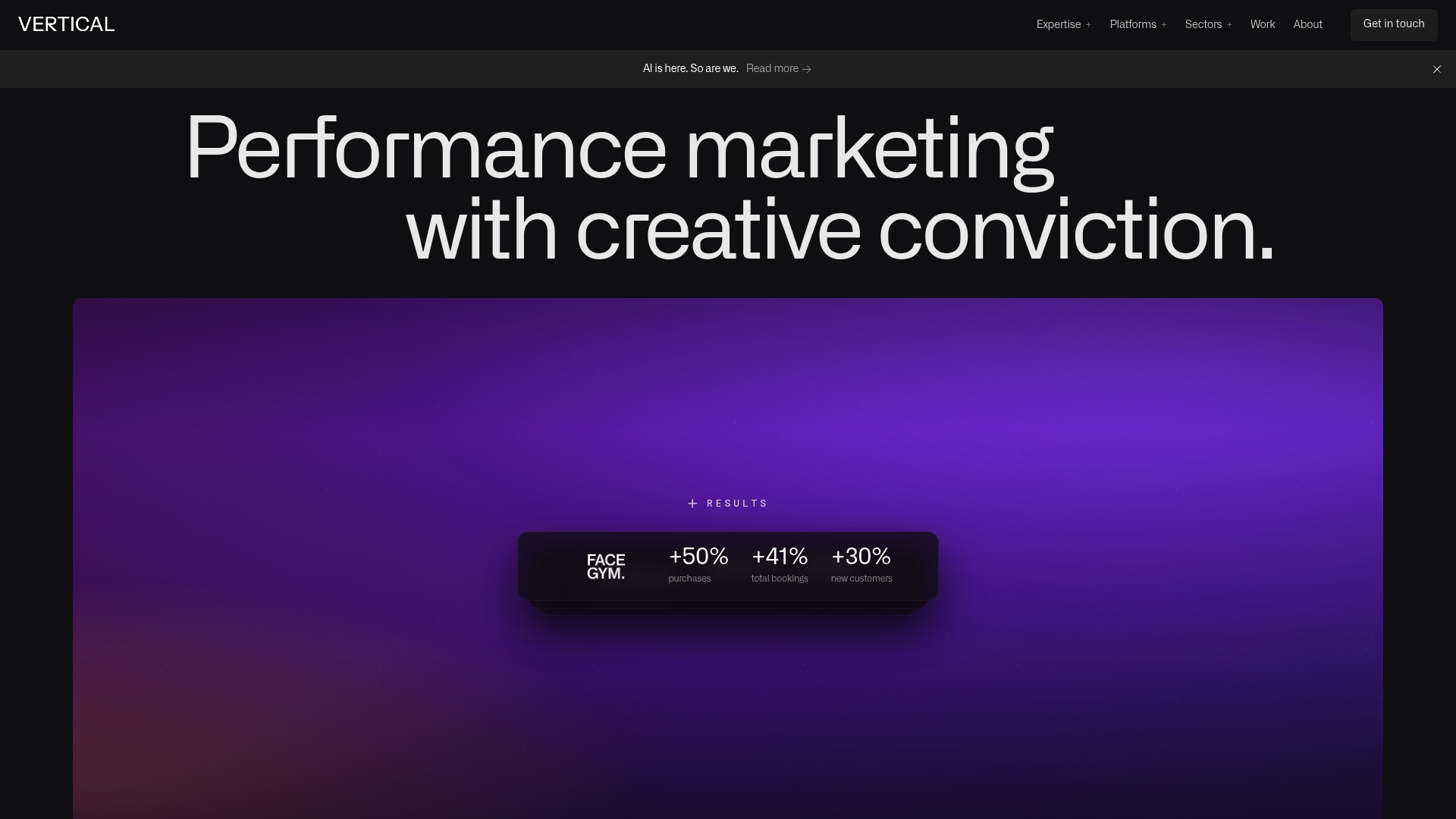
If you would rather not build the framework from scratch, our brand strategy work covers positioning and the messaging that follows from it. The same team can then carry the framework into paid social, email, creative and your website, so there is one brief and one hierarchy. Clients such as FACEGYM have reported a 50% increase in purchases and a 41% rise in bookings working with us.
See the full list of growth marketing services, or talk to us about consulting if you need strategic support for your in-house team or agency.
FAQ
What is the difference between a messaging framework and a messaging strategy?
A messaging strategy is the broader plan: which messages you use, on which channels, to reach which business goals. The framework is the structured document inside it that holds the core message, pillars, proof and audience variations. In practice, the framework is the part people open every day.
How long should a brand messaging framework be?
One to three pages is enough for most businesses. The point is that writers, designers, media buyers and sales staff can read it in a few minutes and apply it. Anything longer tends to move into brand guidelines or a playbook, which is a different document.
How many pillars should a framework have?
Three is a good default, and the NZTE guide suggests four to six as the upper range. The test is distinctness and proof. Each pillar should be different from the others and have a figure, customer result or testimonial behind it. If you cannot prove a pillar, hold it back.
How often should we update it?
Update it when your positioning, product, pricing or main audience changes, and review it once a year as a matter of routine. Between reviews, check new campaigns against it. If good work keeps falling outside the framework, that is a sign the framework needs revising.
Do we need a separate framework for each audience?
No. Keep one core message and one set of pillars, then write short audience versions that change the emphasis. A separate framework per audience tends to produce separate brands.
Sources
- MarketingProfs: A Messaging Framework: Why You Need It, How to Build It
- Content Marketing Institute: Align Your Messaging With This Simple Tool
- myNZTE: Build your own brand messaging framework