A brand ambassador programme is built on ongoing relationships, not a single sponsored post. Managing a brand ambassador programme means finding people who genuinely fit your brand, setting clear expectations and tracking what their activity contributes. The right ambassadors brings credibility and useful content, but follower counts alone won’t show whether the partnership is working.
Choosing ambassadors takes more than spotting a popular account. You need people whose audience, values and content align with your brand, plus a practical way to assess their impact. Look beyond likes to tagged-link clicks, promo-code use, sales and assisted conversions.
This guide explains who can make an effective brand ambassador, how to recruit for fit and how to structure a measurable programme. Learn how to set goals, brief ambassadors and track both direct results and the role their content plays in the customer journey. The focus is practical: build a programme with clear standards, consistent content and evidence you can use to improve it.
Key Takeaways
- Choose ambassadors for their genuine fit with your brand and audience, not follower count alone.
- Set clear roles, content expectations and programme goals before launching.
- Use tagged links and promo codes to track direct activity, then assess assisted conversions for a fuller view of impact.
- Decide whether a long-term ambassador relationship or a one-off influencer campaign better suits your objective.
- Study programme examples to spot practical ways to recruit contributors and keep their content consistent.
Tracking clicks, sales and assisted conversions
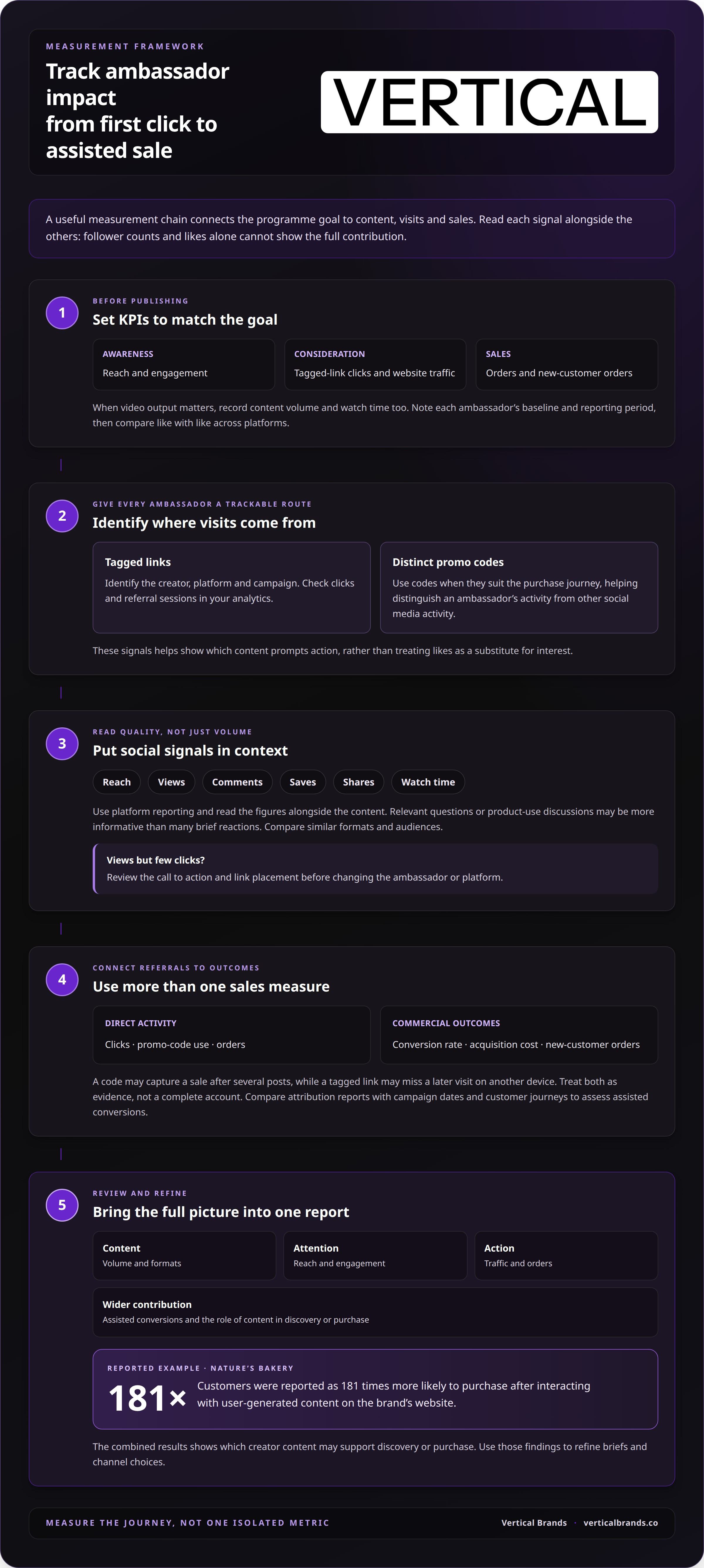
- Set KPIs before publishing. Choose measures that match the programme goal: reach and engagement for awareness, tagged-link clicks and website traffic for consideration, or orders and new-customer orders for sales. Track content volume and watch time when video output matters. A clear KPI hierarchy stops high social media reach from masking weak referral traffic or limited sales. Record each ambassador’s baseline and reporting period, then compare like with like across platforms. This gives managing a brand ambassador programme a measurable starting point.
- Give each ambassador trackable routes to your site. Use tagged links to identify the creator, platform and campaign, then check clicks and referral sessions in your analytics. Assign distinct promo codes when they suit the purchase journey. For example, an ambassador’s Instagram link and code can help separate visits and orders from other social media activity. These signals help identify which content prompts action, rather than relying on likes as a proxy for interest.
- Measure social reach and engagement as quality signals. Record reach, views, comments, saves, shares and watch time using each platform’s reporting. Read those figures alongside the content itself: relevant questions or product-use discussions may offer more insight than a high volume of brief reactions. Compare posts with similar formats and audiences. If a video earns views but few clicks, review its call to action and link placement before changing the ambassador or platform.
- Connect referrals to sales without relying on one metric. Track orders, conversion rate, acquisition cost and new-customer orders alongside clicks and promo-code use. A code may capture a sale after a customer has seen several posts, while a tagged link may miss a later visit on another device. Treat both as evidence, not a complete account. Compare attribution reports with campaign dates and customer journeys to understand where ambassador activity may have assisted a conversion.
- Review the combined results and act on them. Build a report that brings content volume, reach, engagement, traffic, orders and assisted conversions into one view. Nature’s Bakery customers were reported as 181 times more likely to purchase after interacting with user-generated content on the brand’s website. That example points to the value of measuring content beyond its original social post. For managing a brand ambassador programme, use the combined results to identify which creator content supports discovery or purchase, then refine briefs and channel choices around those findings.
Ambassador programmes versus one-off influencer campaigns
- Match the relationship to the campaign objective. Use a one-off influencer campaign for a defined launch, seasonal push or product announcement. Choose an ambassador programme when repeated content and an ongoing relationship matter. Ambassadors typically work with a brand over the long term; influencers may deliver a single campaign. A creator can progress from product seeding to affiliate activity, then become a regular brand representative.
- Put the agreement in writing. Under UK law, the agreement should set out the role, deliverables, compensation, content usage, exclusivity, term and exit process. A clear contract and brief establish expectations and help prevent misunderstandings. Ambassador contracts commonly run for 6 to 12 months, often with renewal clauses. Consider a clause allowing either party to end the partnership with 30 days’ notice.
- Build disclosure into every brief. UK brands should include ASA disclosure requirements in their advertising practices and account for FCA regulations relating to incentives. State how paid, gifted or incentivised content must be identified, and make the responsibility clear in the agreement. Give creators an example disclosure for each platform and review content before publication where appropriate.
- Set costs from the programme design, not a generic rate. UK programme costs depend on creator compensation, content volume, usage rights, product allocation, fulfilment and management time. Affiliate commissions can form part of the model, while fixed fees may apply to agreed content. Build a forecast around the deliverables and resources required, then compare that investment with the programme’s intended outcomes.
- Plan the launch around one objective and selected channels. Define the audience, campaign goal, creator profile, content formats and measurement approach before recruiting. Start with a manageable group, then test the operating process before expanding. Choose a focused platform mix rather than asking every ambassador to publish everywhere. A launch brief should specify deadlines, approval steps, links, codes and content-use permissions.
- Train ambassadors with concise, usable guidance. Provide brand principles, product information, content examples, restrictions and disclosure instructions. Explain the expected platform, format and frequency, while leaving room for the creator’s own voice. Motivate contributors through recognition, useful feedback, early product access or progression into featured roles. Clear terms make participation easier to understand and sustain.
- Choose tools that fit the workflow. A shared tracker can record agreements, content deadlines, links, codes and performance. Use platform analytics for reach and engagement, plus web analytics for referral traffic and conversions. A community space such as Slack, Discord or a group chat can support prompts and feedback. Keep the system proportionate to programme size.
- Manage risk, then scale from evidence. Review disclosure, content accuracy, brand fit and rights before publication. Set an escalation route for missed deadlines or unsuitable content, and document how either party can pause or end work. Compare creator output and business outcomes regularly. Keep strong partnerships, revise weak briefs and expand only when the workflow remains manageable. For structured influencer campaign planning, align creator activity with the wider marketing plan.
Who is a brand ambassador?
- Define the role by the relationship. A brand ambassador represents a business through an ongoing connection, sharing its products or values with an audience. Unlike a customer who posts once, an ambassador agrees to recurring activity, such as product demonstrations, personal recommendations or event-related content. For example, a home cook might regularly show how a kitchen product fits into weekday meals. The relationship should reflect genuine use and authentic interest, not just a paid endorsement.
- Separate ambassador work from athlete partnerships. Athletes can demonstrate product performance in demanding conditions, while ambassadors can show how products fit into everyday life. A running shoe brand might work with an athlete to demonstrate performance during training, while a runner shows how the shoes fit into regular routines. The roles can overlap, but each needs a distinct purpose. Set expectations around expertise, content and audience, rather than treating every representative as interchangeable.
- Map each ambassador to a story lane. Organise contributors around themes that support the brand strategy, such as outdoor activities, family life or sustainable habits. A hiking brand might feature one ambassador’s trail preparation and another’s weekend walking routes. These story lanes give content a coherent direction without forcing everyone into the same format. They also make it easier to brief contributors, select content for different channels and understand which perspectives reach relevant audiences.
- Agree benefits and responsibilities before publishing. Spell out the expected content, platforms, frequency, approval process, usage rights and compensation. An ambassador could receive product, a discount code or commission, depending on the agreement. Explain any restrictions and disclosure expectations in plain language. Clear terms protect authenticity: contributors know what they’ve agreed to, while the brand avoids treating a personal recommendation like an unrestricted advert. Keep the brief practical, with examples of suitable content and claims.
- Assess contribution beyond audience size. Review whether a person’s values, communication style and community align with the brand. A creator with a smaller, engaged audience may offer a closer fit than a celebrity whose content feels disconnected. Look at previous posts for credible product use, thoughtful audience interaction and consistent subject matter. The strongest ambassadors can explain why a product matters to them in their own voice while meeting agreed expectations reliably.
Athletes can provide evidence of product performance, while ambassadors show how products fit into everyday life, giving each role a distinct contribution.
Recruiting ambassadors based on evidence
Recruit for audience fit and credible participation, not follower count alone. Use applications and post-purchase invitations to find people with relevant product experience.
Set recruitment criteria and invite applications
- Define the evidence that matters. Set criteria around audience relevance, subject knowledge, content quality and genuine interest in your product. Review recent posts for useful context: a gardening brand, for example, could prioritise people who regularly share practical growing advice. Don’t make follower count the main filter. A smaller creator with strong brand fit may be more suitable than a larger account with unrelated content.
- Make applications easy to assess. Ask applicants which platforms they use, what they create and why they want to represent the brand. Request examples of existing content, not just follower totals. Applications also reveal how clearly someone communicates and whether their style suits the programme. Keep the form focused, with questions tied to the role and the audience you want to reach.
- Invite a broad pool, then select deliberately. An open application process can attract many smaller-scale ambassadors. Use a consistent review method to compare each person’s relevance, communication and content format. Avoid selecting solely for reach or polished production. Evidence of real product use and sustained interest can indicate a better fit for a long-term relationship.
Recruit ambassadors after purchase
- Invite customers after they’ve experienced the product. A post-purchase message can ask whether they’d like to apply or share content. Keep the invitation separate from essential order information, and explain what taking part involves. For example, a customer who has shared a thoughtful product review may be a stronger prospect than someone selected only from a social media profile.
- Use text messages selectively. Euphoria Fest sent interested ambassadors a 25 percent ticket discount through three text messages. Its text-message campaign achieved a conversion rate 10 times higher than its past email campaigns. Treat this as one example, not a forecast. A concise message can make an invitation easy to act on, but the offer and audience should match the programme.
- Track recruitment sources and refine them. Label applications by source, such as a post-purchase email, text invitation or social post. Then compare completed applications and accepted ambassadors from each route. If customer invitations bring in people with useful product experience, improve the message or timing. If a source produces poor-fit candidates, adjust its audience or recruitment criteria before expanding it.
Brand ambassador programme examples
- Study what happens after product seeding. A UK brand sent 80 gift boxes, followed by a burst of Instagram Stories. The activity created initial content, but sustaining posts and attributing sales proved difficult. The lesson is operational: gifting can prompt a first wave, but it doesn’t establish a continuing programme. Before sending products, decide how ambassadors will share content afterwards, what follow-up they’ll receive and how activity will be tracked.
- Turn a one-off burst into a repeatable structure. For a similar launch, group creators into story lanes, such as product education, daily use or customer styling. Give each lane a clear content purpose and platform. A homeware brand, for example, could ask one group to demonstrate product features and another to show the item in everyday routines. This gives followers varied reasons to engage while keeping the programme coherent.
- Choose a reward that supports the intended behaviour. If the goal is product feedback, invite selected customers to test an item before launch and share their observations. If the goal is referrals, use individual links or codes and explain how rewards are earned. A discount can encourage trial, but it won’t replace a clear role or relevant content. Decide what contribution matters before selecting the incentive.
- Keep the channel strategy focused. A programme that tries to cover every social platform can dilute content and complicate reporting. Select channels where the intended audience already engages, then brief creators for those formats. For example, a short demonstration may suit a video-first channel, while a detailed product story may work better in a caption or carousel. Measure each format against its specific purpose.
- Build a programme people can sustain. Set a realistic rhythm for prompts, feedback and recognition. A weekly routine can include content ideas, reminders about links or disclosure, and acknowledgement of useful contributions. This gives ambassadors a reason to stay involved beyond their first reward or post. The routine also helps the brand spot stalled participation before a campaign becomes difficult to maintain.
- Use examples to improve the next cycle. Compare the UK gifting example’s initial Stories with later content volume, referral activity and sales attribution. Identify where the process broke down: recruitment, follow-up, content guidance or measurement. Keep the parts that generated useful audience response, then adjust the rest. If creator content is central to the plan, strengthen your UGC content strategy around clear roles and repeatable publishing.
Vertical Brands
Vertical Brands can connect ambassador activity with your wider growth strategy. If creator content generates attention but its contribution to traffic, leads or sales remains unclear, coordinated campaign planning and measurement can clarify its role. Paid Social, Paid Search, Influencer Marketing and Email Marketing & CRM Management can support different parts of the customer journey, from reaching audiences to following up with interested customers. The right mix depends on your programme objectives and how ambassadors contribute. Coordinating activity across channels also helps teams decide which content to develop and where to use it.
For a practical discussion about connecting ambassador activity with your growth strategy, contact Vertical Brands.
Turn your programme into a learning system
Make each ambassador cycle inform the one that follows. Decide who owns the programme, how insights reach the wider team and which decisions those insights should shape. This creates a clearer connection between creator activity and the customer journey, rather than treating each campaign as a standalone effort.
Managing a brand ambassador programme also means coordinating creator content with the channels that can extend its value. Vertical Brands can support that wider growth activity through Klaviyo Email Marketing, Email Marketing & CRM Management and Paid Social. A clear owner and shared reporting keep the programme connected to your broader marketing priorities.
Ready to plan the next stage? Contact Vertical Brands to discuss your programme. With a defined direction and a consistent learning cycle, you can build a programme that grows with your business.
Frequently Asked Questions
Rewarding ambassadors: what perks should you offer?
Offer perks that match the contribution you want to encourage. Product access may suit ambassadors who enjoy testing and discussing new releases; public recognition can appeal to creators seeking visibility. You could also invite experienced contributors to give feedback on future campaigns or choose their preferred content format. A simple tier structure also gives contributors a visible path to deeper involvement, provided each level has clear, achievable expectations.
How do you recruit and select brand ambassadors in the UK?
Use an open application route alongside invitations to engaged customers, then assess applicants against consistent criteria. Review a sample of recent content for subject relevance, communication style and genuine interest. For example, a food brand could ask applicants to describe a recipe they would make with its product. This reveals creative judgement and audience fit more clearly than follower count alone.
What incentives and compensation work best for brand ambassadors?
The right arrangement depends on the work expected. Product gifting can suit product feedback or informal content, while a defined fee may fit agreed deliverables. Commission can connect rewards to referral activity, and a discount code may give followers a reason to try the product. Set out what triggers each reward, when it is provided and whether content usage is included. Clear terms help avoid mismatched expectations.
Which KPIs measure brand ambassador programme performance and ROI?
Choose KPIs that reflect the programme’s objective. For awareness, examine reach and meaningful engagement; for acquisition, assess referral visits, orders and new customers. To evaluate ROI, compare the programme’s attributable financial contribution with its total costs, including compensation, products and administration. Keep direct sales distinct from assisted conversions, so the assessment recognises influence without crediting ambassadors for every purchase during the campaign.
How should brands track ambassador content, referrals and sales?
Create a central record connecting each creator to their posts, referral links, codes and results. Use a consistent naming format, such as creator, platform and campaign, so reports can be compared without manual guesswork. Save publication dates and content examples alongside analytics. Review platform engagement and website orders together, then note where a customer journey included several touchpoints before purchase. This gives the team a clearer basis for future decisions.
How much does it cost to run a brand ambassador programme in the UK?
UK programme costs depend on creator compensation, content volume, usage rights, product allocation, fulfilment and management time. Affiliate commissions can range from 5% to 30%, while fixed fees may apply to agreed content; forecast the investment from the planned deliverables and resources.