Photo by Brando Makes Branding on Unsplash
A paid search strategy is a plan for which searches you pay to appear on, what you want each click to do, and how much a customer is worth to you. The campaign settings come second. Brands that start with margin, conversion tracking and a clear structure get more from every pound than brands that start by launching ads. We built this guide for decision-makers at eCommerce, B2B, education and consumer service businesses who want to judge a Google Ads plan, whether it is run in-house or by an agency.
TL;DR
- Start with the economics: your margin and your target cost per customer decide your budget and bids, not the platform’s suggestions.
- Accurate conversion tracking comes before everything else, because Smart Bidding learns from your conversion data and amplifies any error in it.
- Group keywords into tight themes, review the search terms report regularly and add negative keywords.
- Judge results on profit. ROAS (return on ad spend) alone can look healthy while the business loses money.
- One team owning strategy, creative, bidding and the website removes the hand-offs where paid search plans usually stall.
Table of Contents
- What paid search is and how the auction charges you
- Step 1: Set goals from your margin, not from the platform
- Step 2: Get conversion tracking right before you spend
- Step 3: Choose keywords by intent and match type by data
- Step 4: Structure campaigns so you can read the results
- Step 5: Set budgets and bids that match how the system works
- Step 6: Write ads and landing pages as one message
- Step 7: Optimize with search terms, negatives and the right metrics
- How paid search fits with SEO
- Our view: strategy fails at the hand-offs
- Where we can help
- FAQ
- Sources
What paid search is and how the auction charges you
Paid search means ads that appear above or beside organic results when someone types a query. Google marks them with an “Ad” label, and advertisers are charged only when someone clicks. You will also hear it called SEM (search engine marketing), Google Ads or search ads. For a strategy they mean the same thing: you bid on searches and pay per click.
Every time someone searches, an ad auction runs and Ad Rank decides whether and where your ad shows. Ad Rank depends on your bid, the quality of your ad and landing page, and the assets you add, such as sitelinks. That matters for your strategy, because high-quality ads can win auctions at lower cost. A competitor with a bigger budget does not automatically beat you.
You also rarely pay your maximum bid. Your actual cost per click is often below your maximum, because you pay what you need to clear the thresholds and beat the advertiser below you. Google also describes Quality Score as a 1 to 10 estimate built from keyword quality, ad relevance and landing page experience. It influences both cost and effectiveness.
The practical lesson is that cost per click is the result of your account quality, not a fixed market price. Weak structure, vague ads and slow landing pages make every click more expensive.
Step 1: Set goals from your margin, not from the platform
The first decision is what a conversion is worth. Write down three numbers before you open Google Ads:
- Your gross margin per order or per customer, after cost of goods, fulfilment and returns.
- The most you can pay to acquire a customer and still be profitable, or break even on the first order if repeat purchases make up the rest.
- Your conversion actions: purchases, booked appointments, demo requests, course enrolments. Each needs a value, even an estimated one.
Here is a worked example. An online store sells a product at £60 with a 40% margin after returns and fulfilment, so each order leaves £24 before advertising. A ROAS of 4 means £4 of revenue per £1 spent, so £15 of ad cost on that £60 order. That leaves £9 of contribution. At a ROAS of 2.5 the ad cost is £24 and the order only breaks even. The same ROAS target is therefore good for one business and a loss for another. ROAS is attributed revenue divided by ad spend, and it excludes product costs, staff time, refunds and overheads, so it is not profit.
For lead generation, the same logic applies with a different ending. Cost per lead matters less than how many leads become paying customers. A B2B brand paying £120 per lead that closes one in five pays £600 per customer. If a customer is worth £5,000 in lifetime gross profit, that is a strong channel. If the sales team cannot close them, a £40 lead is expensive.
Our guide to improving eCommerce ROAS goes deeper on why a single ROAS target misleads.
Step 2: Get conversion tracking right before you spend
Tracking is the part of a strategy most often skipped, and it decides how well everything else works. Google’s eight-step campaign preparation guide lists conversion tracking as part of setup, and it is required for some campaign types. Without it you cannot assess your ads, targeting or campaigns.
Before launch, check four things:
- Every conversion that matters is counted once. Double-counted purchases inflate ROAS and teach the bidding system the wrong lesson.
- Values are passed through. Conversion value lets you measure the total business value generated, not just the number of conversions.
- Ad platform numbers match your own. If Google Ads reports far more orders than your shop platform or CRM, find out why before setting targets.
- Offline outcomes come back in. For lead generation and bookings, feed qualified leads and closed sales back into the account so bidding targets real customers, not form fills.
This is also where tracking and attribution work pays for itself. When we run paid search for a client, tracking and attribution sit alongside the media buying in the same team, so the numbers the bidding system learns from are checked by the people who read the results.
Step 3: Choose keywords by intent and match type by data
Keyword targeting is the basis of paid search: the keyword is the unit you bid on in the auction, and the Google Keyword Planner can help you find candidates. Sort them by intent:
| Intent | Example search | What to do |
|---|---|---|
| Brand | your company name | Bid defensively, keep it separate, and follow UK advertising rules |
| High intent | “buy running shoes online” | Core budget, dedicated landing pages |
| Comparison | “best CRM for small teams” | Test with comparison or solution pages |
| Research | “how to choose a CRM” | Lower bids, or leave to organic content |
Brand terms deserve their own treatment. They convert well, but they can flatter your overall results and, in the UK, bidding on competitors’ names carries compliance risks. We cover this in our branded search bidding playbook.
For match types, Google’s UK guidance says broad match with Smart Bidding can reach more relevant searches expected to perform within your goals. It also says that if you can measure conversions accurately and use a conversion-based strategy (maximise conversions with a target CPA, or maximise conversion value with a target ROAS), AI Max for Search can give the most reach and conversions. Phrase or exact match suits goals such as target impression share. The takeaway: the more reliable your tracking, the more freedom you can give the algorithm. If your tracking is weak, keep match types tighter.
Step 4: Structure campaigns so you can read the results
Structure is what lets you learn from the account. Google recommends grouping keywords by theme or product into tightly themed ad groups, using a mix of match types and writing three to five ads per group so better-performing ads show by default.
A structure that works for most businesses:
- Brand campaign: your own name and products, with its own budget.
- Non-brand campaigns by product line or service: one theme per ad group, with ad copy that repeats the searcher’s language.
- Shopping or Performance Max for catalogues: for online stores, product feeds do much of the work. See our guides to Google Shopping campaign management and Performance Max strategy.
- Testing campaign: a ring-fenced budget for new keywords, audiences and ad angles.
Separate budgets by purpose. A single shared budget lets brand clicks, which are cheap and convert well, absorb the money that should be funding new customer acquisition.
Step 5: Set budgets and bids that match how the system works
With CPC bidding you set an average daily budget. Google may spend up to twice it on a busy day, but never more than the daily budget times 30.4 in a month. Plan monthly spend, not daily spikes.
To size a budget, work backwards:
- Take your target number of customers or leads per month.
- Divide by your expected conversion rate to get the clicks needed.
- Multiply by the expected cost per click from Keyword Planner estimates.
If the result exceeds what your acquisition cost allows, you have found a problem with the plan before spending a pound. Either the offer, landing page or target audience needs work, or the keyword set is too competitive for your margin.
For bidding, start with a strategy that matches your data. Accounts with few conversions often begin with a simpler approach and move to target CPA or target ROAS once conversion volume builds. Set the target from your Step 1 economics, not from a benchmark you found online. Mobile also deserves a look: the IAB UK notes that more than 50% of searches happen on mobile, so you can weight bids by device if your data shows a gap.
If you also sell to people who use other engines, a Microsoft Ads setup can add reach, and UET tracking should be right before launch.
Step 6: Write ads and landing pages as one message
Ad Rank rewards relevance, and customers reward consistency. The searcher should see their own words in the headline, then land on a page that continues the same promise.
- Headlines: include the search theme, a concrete benefit and a differentiator such as delivery terms, guarantee or price point.
- Assets: add sitelinks, callouts and structured snippets. They improve visibility and feed into Ad Rank.
- Landing page: one clear action, fast loading and mobile-friendly. The IAB UK calls a fast, mobile-friendly landing page the most important launch requirement.
- Offer: if a click lands on a generic homepage, even a good ad wastes money.
This is where an integrated team helps. When the people buying clicks can also change the page, test a new layout and rewrite the ad, tests finish in weeks, not quarters.
Step 7: Optimize with search terms, negatives and the right metrics
After launch, the weekly routine is simple. Google recommends checking the search terms report regularly and adding negative keywords, which stops spend on irrelevant queries. Then review in this order:
- Search terms: which real queries triggered ads, which converted, which wasted money.
- Quality signals: ad relevance, landing page experience and expected click-through rate.
- Conversion rate and value by campaign: Google lists conversion rate, conversion value, ROAS, bid strategy status and conversions as the core metrics for a Search campaign.
- Profit view: contribution after costs.
Other metrics help diagnose problems. CTR (clicks divided by impressions) tells you about ad relevance. CPC (spend divided by clicks) tells you about auction pressure. Conversion rate (conversions divided by clicks) tells you about the page and offer. Impression share tells you how much demand you are missing.
Is a ROAS of 4 good?
It depends on margin. Use this test: divide 100 by your margin percentage. At a 40% margin the break-even ROAS is 2.5, so a ROAS of 4 leaves a profit. At a 25% margin the break-even is also 4, so a ROAS of 4 earns nothing. Returns, fulfilment and discounts push break-even higher. Set your target ROAS from your own margin, then compare it with your own statements and reports.

How paid search fits with SEO
Paid and organic search answer the same searches in different ways. Paid gives you speed and control: you can appear for a query this week, test offers and learn what converts. Organic builds visibility that continues without per-click charges, but takes longer. They work best when they share data. One approach, often called holistic search, has paid and organic teams sharing keyword data and planning budget together, so each channel covers queries the other cannot win efficiently. In practice, paid tests show which pages and phrases convert, and you then invest in ranking for those. Organic keyword research, in turn, surfaces new paid themes.
The same logic applies to the rest of the funnel. Search catches demand that already exists. Paid social, email and creative create and retain it. A plan that treats paid search as one part of customer acquisition, with email capturing and retaining the customers it brings in, usually makes each pound go further. Our overview of growth marketing agency services and fees shows how these pieces connect.
Our view: strategy fails at the hand-offs
Most paid search plans we read are sound on paper. They fail between teams. The strategist sets a target, the media buyer changes bids, a designer makes the ads, a developer owns the landing page, and nobody owns the number that matters: profitable customers.
That is why we put strategy, creative, performance marketing and web development under one roof. A senior team that sees the margin, the tracking, the search terms and the page together can make a decision in one conversation instead of four.
Our advice is to treat paid search as a system. Fix the measurement, structure the account around intent, give the algorithm clean data, and review profit, not just ROAS. Done in that order, the account gets clearer every month.
Alex
Where we can help
We run paid search, paid social, display, email and CRM, creative and website development as one integrated team, so the plan above does not need to be split across vendors. If you want a plan built on your margins, we start with digital marketing strategy and media planning and carry it through to campaign management, creative and landing pages. For the wider picture, see how we approach growth consulting.
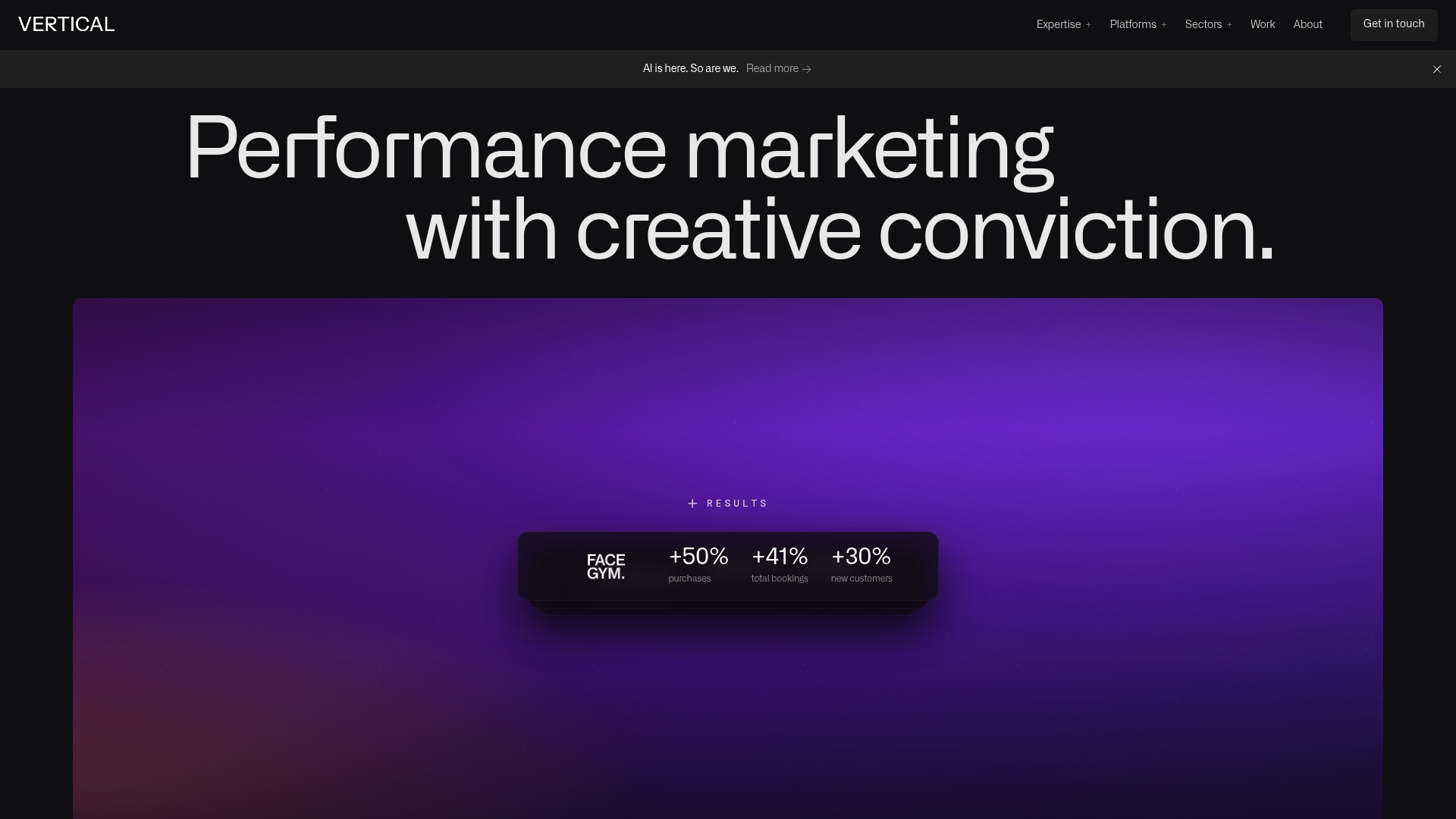
One result from our work: FACEGYM saw a 50% increase in purchases and a 41% rise in bookings. If you want to see how the same approach would apply to your account, talk to our team.
FAQ
How much should I spend on a paid search strategy?
Work backwards from the customers you want. Divide that target by your conversion rate to get the clicks you need, then multiply by your expected cost per click. Compare the result with the most you can pay per customer. If it does not fit, change the offer, page or keyword set before raising the budget.
Is paid search better than SEO?
They do different jobs. Paid search brings traffic quickly and lets you test messages and offers. SEO builds longer-term visibility. Using paid data to guide organic investment, and organic research to guide paid themes, usually works better than choosing one.
Is paid search still worth it?
Yes, when your tracking is accurate and your economics support the cost of a click. Searchers using high-intent queries are already looking for what you sell, and you pay only when they click. The decision should rest on your contribution margin and your cost per customer.
How long does it take to launch a campaign?
The IAB UK says a campaign can be launched within an hour if you have a website. A strategy-led launch with tracking, structure and landing pages takes longer, and it is what makes the later months more efficient.
Sources
- What is paid search? (Google)
- Using Google Ads for online marketing (Google Ads Help)
- How much does Google Ads cost? (Google Ads)
- Actual cost-per-click (Google Ads Help)
- Search ad campaigns (Google UK)
- Reaching the right customers on Search (Google Ads Help)
- A guide to paid search advertising for small businesses (IAB UK)
- Eight steps to prepare your campaign for success (Google Ads Help)
- Optimise your ads and landing pages (Google Ads Help)
- Use data to optimise your Search campaigns (Google Ads Help)
- How to measure results from paid search ads (TechBullion)
- Do your SEO and paid search strategies work together? (Siteimprove)